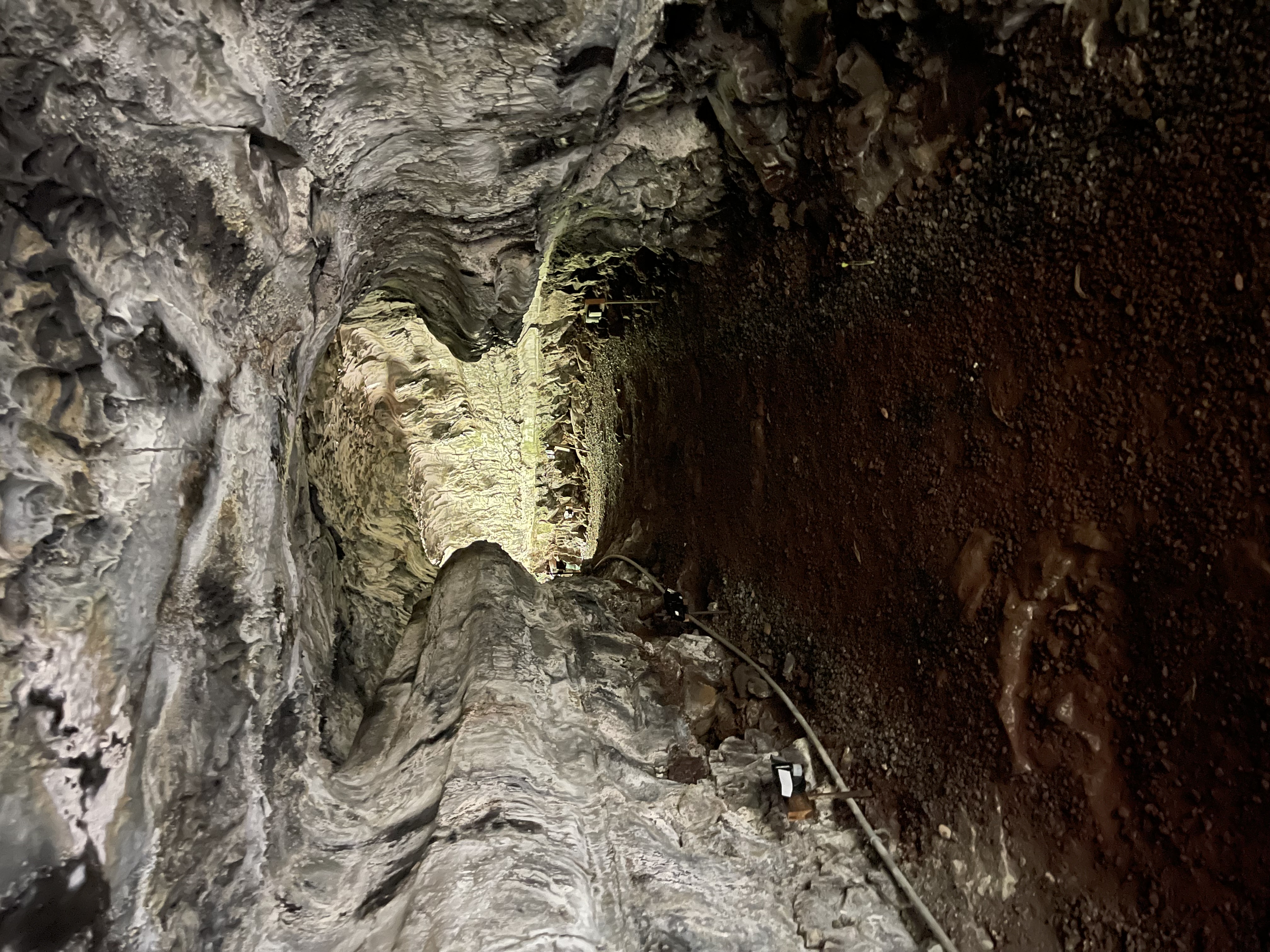
A Guide to Big Island Lava Tubes: Where to Go & How to Be Safe
Explore the fascinating underworld of Hawaiʻi's Big Island. This guide takes you inside the most accessible lava tubes, from the famous Nāhuku to the wild Kaumana Caves.
Step out of the lush Hawaiian rainforest and into a cool, subterranean world. Walking through a lava tube is like stepping back in time, tracing the path of molten rock that once shaped the very ground beneath your feet. The Big Island of Hawaiʻi, home to some of the world's most active volcanoes, offers visitors a unique chance to explore these incredible geological formations up close.
From the well-lit, family-friendly path at Nāhuku to the more rugged, bring-your-own-headlamp adventure at Kaumana Caves, this guide covers the best and most accessible lava tubes on the island. We'll explain how they form, where to find them, and most importantly, how to explore them safely and respectfully.
What Exactly is a Lava Tube?
Lava tubes are natural conduits formed by flowing lava. According to the U.S. Geological Survey (USGS), they are a common feature of pāhoehoe lava flows, the smooth, billowy, or ropy-textured lava common in Hawaiʻi. The process is fascinating:
- As a channel of lava flows, its surface is exposed to the air and cools faster than the interior, forming a hard crust.
- This crust insulates the molten lava flowing inside, keeping it hot and fluid, allowing it to travel much farther than it otherwise would.
- When the eruption subsides and the source of lava is cut off, the river of lava inside the tube drains away, leaving behind a hollow, cave-like tunnel.
Over time, features can form inside the tube. "Lava-cicles," or small stalactites, can hang from the ceiling where lava dripped as the tube drained. The walls often have a glazed, glassy appearance from the intense heat. These are not caves in the traditional sense, formed by water and limestone, but are purely volcanic in origin.
Nāhuku (Thurston Lava Tube): The Main Attraction
For most visitors, Nāhuku is the quintessential Big Island lava tube experience. Located within Hawaiʻi Volcanoes National Park, it's easily the most famous and accessible lava tube on the island. The name Nāhuku means "the protuberances" in Hawaiian, possibly referring to the lava drippings found inside.
- Location: Find Nāhuku just off Crater Rim Drive in Hawaiʻi Volcanoes National Park, a few minutes' drive from the Kīlauea Visitor Center.
- The Experience: The journey begins with a short, beautiful walk through a lush native fern forest. You'll descend a paved ramp into the mouth of the cave, which is wide and tall. The main portion of the 600-foot (183m) tube is lit from 8 a.m. to 8 p.m., making it easy to navigate. The floor is relatively flat and paved in most sections. After you emerge from the tube's far end, a short loop trail takes you back to the starting point.
- What to Know: The National Park Service (NPS) has implemented a one-way system for traffic and parking. Parking is limited, and you may need to circle the lot or park at the larger Kīlauea Iki Overlook and walk (about 0.5 miles). The best time to visit to avoid crowds is before 9 a.m. or after 4 p.m. While the main section is lit, the lights can sometimes be dim, and a flashlight or phone light is useful for examining the unique textures on the walls.
Nāhuku is estimated to be about 500 years old, formed during an eruption of Kīlauea. It’s an incredible, family-friendly introduction to the underworld of Hawaiian volcanoes.
Exploring Kaumana Caves: A Walk on the Wild Side
If Nāhuku is the polished showpiece, Kaumana Caves County Park offers a more rugged and adventurous alternative. Located just a 15-minute drive from downtown Hilo, these caves are part of a massive lava tube formed by a Mauna Loa lava flow in 1881 that famously stopped just short of the city.
- Location: Kaumana Caves County Park is located right off Saddle Road (Highway 200) at the 4-mile marker.
- The Experience: Unlike Nāhuku, there's no grand visitor center here—just a simple parking area, restrooms, and a picnic area. A steep concrete staircase descends into a collapsed skylight, a jungle-draped pit that serves as the entrance to two separate sections of the lava tube. From the bottom of the stairs, you can go left or right into the dark. This is a completely undeveloped cave system. The floor is a chaotic jumble of cooled lava and breakdown rock. There are no lights, no handrails, and no paved paths. You are on your own.
- What to Bring: Exploring Kaumana Caves is not a casual stroll. You must bring the following:
- A bright headlamp: This is non-negotiable. A handheld flashlight is okay, but a headlamp keeps your hands free for balance. Bring a backup light source, too.
- Sturdy, closed-toe shoes: Hiking boots are ideal. The ground is extremely uneven, sharp, and often slippery.
- Water: It gets surprisingly humid and stuffy inside.
- A sense of adventure: Be prepared to duck, scramble, and watch every single step.
You don't need to go far to get the full experience. Even venturing 100 feet in either direction is a thrilling adventure. The sense of raw, untamed nature is powerful here.
Essential Safety for Exploring Lava Tubes
Whether you're in a developed park or a wild cave, safety should be your top priority. Lava rock is sharp, and conditions can be tricky.
- Wear Sturdy Shoes: This is the most important rule. Closed-toe shoes with good grip are essential to protect your feet from sharp lava rock and prevent twisted ankles on uneven surfaces.
- Bring a Light Source (and a Backup): For any unlit tube like Kaumana, a headlamp is best. Even in lit tubes like Nāhuku, a personal light is a good idea in case of power outages or for seeing details. Always have a backup.
- Watch Your Head and Feet: Ceilings can be low, and floors are almost always uneven. Move slowly and deliberately.
- Never Explore Alone: In undeveloped caves, always go with a partner. If you get injured, you'll need someone to help or go for assistance.
- Know Your Limits: Don't push yourself to go deeper than you are comfortable with. The entrance area of Kaumana Caves is impressive enough without a deep trek.
- Respect the ʻĀina (Land): These are fragile environments. Do not touch the delicate formations on the walls or ceiling. Oils from your skin can halt their growth or cause damage. Pack out everything you pack in. Leave no trace.
The Cultural Significance of Lava Tubes
Beyond their geological wonder, lava tubes (ana) hold significant cultural importance in Hawaiʻi. In ancient times, they were used for various purposes:
- Shelter: They provided refuge from the elements and from enemies during times of conflict.
- Water Collection: In drier regions, the slow drip of water percolating through the rock was a precious resource, collected in calabashes.
- Burial Sites: Some lava tubes were considered sacred burial sites (iwi) for aliʻi (chiefs) and are protected by law and custom. This is a primary reason why you should never enter a closed-off lava tube or one on private property without permission—you may be trespassing on a sacred site.
When you visit a lava tube, you are entering a place that is not only a geological marvel but also a part of Hawaiian history and culture. Exploring with a sense of reverence and respect is essential. A great way to deepen your understanding is by learning more about the overall planning of your trip to Hawaiʻi and the cultural context of the islands.