Mauna Loa Eruption Guide: Visiting the World's Largest Volcano
Mauna Loa, the largest active volcano on Earth, last erupted in late 2022. While the eruption has paused, here's what you need to know about its status, safety, and how to experience its immense scale on your visit to the Big Island.
Mauna Loa, the “Long Mountain,” makes up more than half of the entire Big Island of Hawaiʻi. This gentle giant slumbered for 38 years before reawakening in a spectacular eruption in November 2022, reminding the world of its immense power. While the eruption was brief and is now over, it sparked renewed interest and raised questions for visitors planning a trip to the island.
This guide covers everything you need to know about Mauna Loa's current status, how the 2022 eruption unfolded, and how you can safely and respectfully visit the flanks of the largest active volcano on the planet.
The 2022 Eruption: A Spectacle Decades in the Making
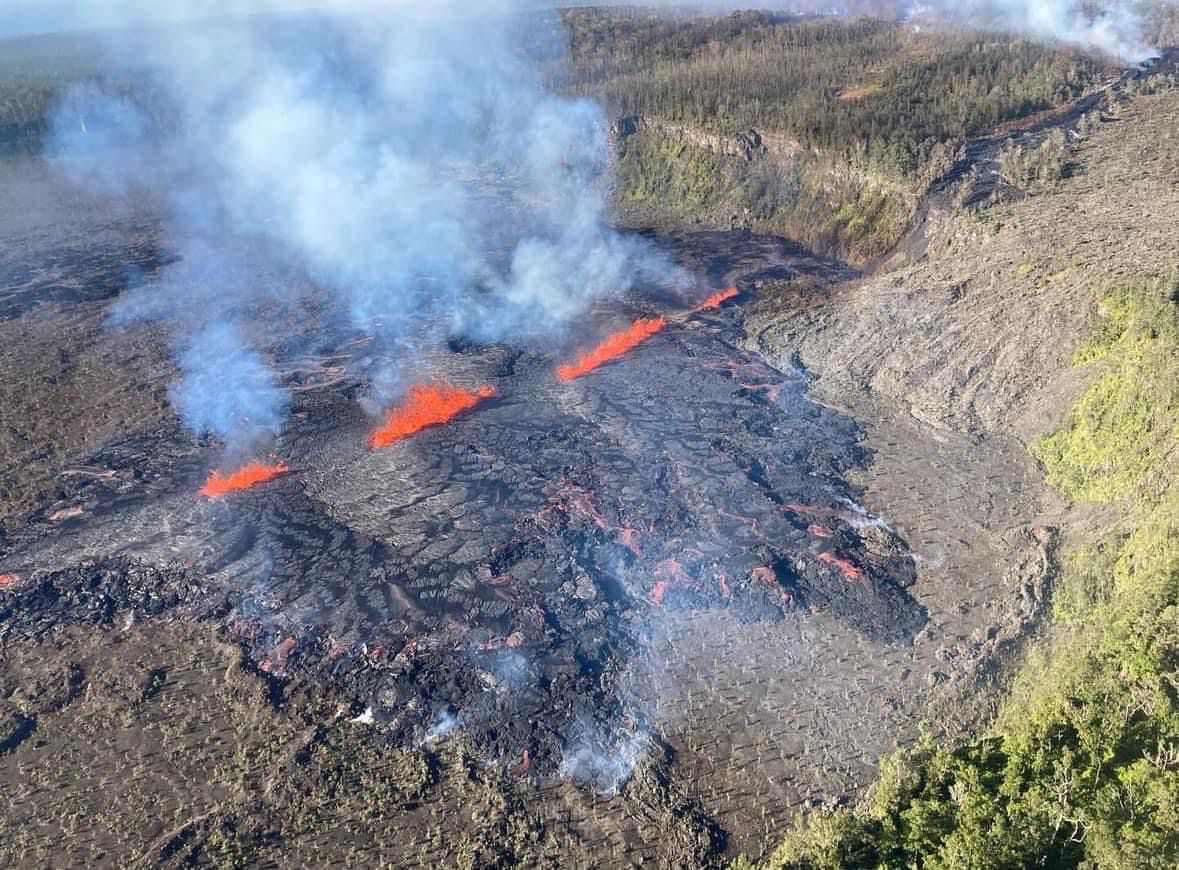
On the night of November 27, 2022, after weeks of increased seismic activity, Mauna Loa began to erupt for the first time since 1984. The initial outbreak occurred within Mokuʻāweoweo, the summit caldera, a remote and inaccessible area. Within hours, however, the eruption migrated down the Northeast Rift Zone, sending brilliant rivers of lava down the northern flank of the mountain.
For nearly two weeks, the island held its breath. The main lava flow crept steadily towards the Daniel K. Inouye Highway (formerly Saddle Road), the critical artery connecting the east and west sides of the island. It was a stunning display of nature's power, visible for miles and drawing thousands of residents and visitors to designated viewing areas. Ultimately, the flow stagnated just 1.7 miles from the highway before the eruption ceased on December 13, 2022. No homes or major infrastructure were damaged.
According to the U.S. Geological Survey (USGS), the eruption produced roughly 200-250 million cubic meters of lava, covering over 16 square miles of land. It was a classic Mauna Loa effusive eruption—characterized by fluid lava flows rather than explosive bursts—a style typical for Hawaiian volcanoes.
What is the Current Status of Mauna Loa?
As of today, Mauna Loa is not erupting. The 2022 eruption is over, and the volcano has returned to a state of quiet.
The USGS Hawaiian Volcano Observatory (HVO) continuously monitors all active Hawaiian volcanoes. They use a color-coded alert level system to communicate the status of a volcano to the public and aviation authorities.
- NORMAL / GREEN: The volcano is in a non-eruptive state. This is the baseline.
- ADVISORY / YELLOW: The volcano is exhibiting signs of elevated unrest above known background levels. An eruption is not imminent or certain.
- WATCH / ORANGE: The volcano is exhibiting heightened or escalating unrest with increased potential of eruption, or an eruption is underway with no or minor volcanic-ash emissions.
- WARNING / RED: An eruption is imminent, underway, or suspected with significant emission of volcanic ash into the atmosphere likely.
Mauna Loa is currently at ADVISORY/YELLOW. The USGS states this is because the volcano's magma storage system remains pressurized and it is still recharging after the 2022 event. This does not mean an eruption is coming soon, but that the mountain is more active than its quietest, pre-2022 background state. For the most current information, always check the official USGS Mauna Loa Updates page.
Is It Safe to Visit the Big Island?
Yes, it is perfectly safe to visit the Big Island. Even when Mauna Loa was erupting in 2022, life in most parts of the island, including the resort areas of Kailua-Kona and the Kohala Coast, continued as normal.
Hawaiian eruptions are typically non-explosive and localized. Lava flows move slowly, and their paths are predictable, giving authorities ample time to make decisions and, if necessary, issue evacuation orders for specific, limited areas. During the 2022 eruption, the primary hazard was the potential closure of the Daniel K. Inouye Highway. Other concerns included vog (volcanic smog) and air quality, which can affect those with respiratory issues, but these conditions vary greatly with wind direction.
Your travel plans are highly unlikely to be affected by Mauna Loa's current status. In fact, seeing the immense, fresh lava flow from 2022 is now a unique and compelling reason to visit.
How to Visit Mauna Loa
Unlike the accessible caldera of Kīlauea, reaching the summit of Mauna Loa is a serious backcountry expedition requiring permits and several days of hiking. However, you can easily drive up its flanks to experience its vast, high-altitude environment. There are two primary ways for visitors to do this.
1. Mauna Loa Road in Hawaiʻi Volcanoes National Park
This is the most accessible and popular route. Located within Hawaiʻi Volcanoes National Park (park entrance fee required), this paved road begins near the Kīlauea Visitor Center and winds its way 13.5 miles up the mountain.
- The Drive: The road is narrow, winding, and steep. It climbs through beautiful native ʻōhiʻa forests before breaking out into the stark, older lava flows of Mauna Loa's upper slopes. The change in landscape is dramatic.
- The Lookout: The road currently ends at the Mauna Loa Lookout at 6,662 feet elevation. Due to impacts from the 2022 eruption, the road beyond this point is closed to vehicles. The view from the lookout is stunning, offering a panoramic perspective of the Kīlauea caldera and the surrounding landscape.
- Hiking: From the lookout, you can walk along the closed road or explore short trails. The trail to the true summit begins far beyond this point and remains closed for public safety pending further assessment by the National Park Service. Always check the official Hawaiʻi Volcanoes National Park website for the latest road and trail closures before you go.
2. Mauna Loa Observatory Road (Mauna Loa Access Road)
For a much higher-altitude experience, you can take the Mauna Loa Observatory Road off the Daniel K. Inouye Highway. This road leads to the Mauna Loa Solar Observatory and NOAA's atmospheric research facility.
- The Drive: This 17.5-mile road is a journey in itself. It's a single-lane paved road (with some rough patches) that climbs relentlessly from the highway at 6,500 feet to the observatory at 11,141 feet. It is steep, has no guardrails, and requires your full attention. While a 4WD vehicle is not strictly required in good weather, it is highly recommended for its stability and ground clearance. This road is not suitable for all drivers or rental cars (check your rental agreement).
- The Destination: The road ends at the Mauna Loa Observatory. Note that the observatory itself is a secure research facility and is not open to the public for tours. The purpose of the drive is to experience the high-altitude environment and the incredible views.
- What to Expect: The landscape is otherworldly—a desolate, Mars-like expanse of ʻaʻā and pāhoehoe lava flows. On a clear day, you'll have breathtaking views of Mauna Kea across the saddle and down to the coast. The air is thin and cold, and the sun is intense. Stargazing from here is phenomenal, but driving down in the dark is treacherous.
Viewing the 2022 Lava Flow
The most accessible place to see the immense river of lava from the 2022 eruption is from the Daniel K. Inouye Highway. Around the 28-mile marker, the highway cuts through a small portion of the flow. However, the bulk of the lava, which sprawls for miles, is clearly visible on the northern side of the road between approximately mile markers 20 and 28.
There are several safe pull-outs along the highway where you can stop to take photos. For your safety, do not stop on the road and do not attempt to walk onto the lava flow. The new lava is extremely sharp, unstable, and can have hidden dangers like deep cracks and hot spots. Respect all posted signs.
Respectful Visitation: He ʻĀina Sagrado (A Sacred Landscape)
Volcanoes in Hawaiʻi are not just geological features; they are wahi pana, sacred places central to Native Hawaiian culture. Mauna Loa, like all volcanoes, is embodied by the goddess Pele. Eruptions are seen as a form of creation, a way Pele builds and shapes the land.
When you visit, you are a guest in a deeply significant place. Please be respectful:
- Do not take any rocks or lava. It is disrespectful and believed to bring bad luck.
- Stay on marked trails and roads. This protects fragile ecosystems and cultural sites.
- Leave no trace. Pack out everything you pack in.
- Do not disturb or stack rocks (ahu). These can be cultural markers or personal offerings. Building your own is considered graffiti.
Preparing for a High-Altitude Visit
A trip up Mauna Loa requires preparation, especially for the Observatory Road.
- Vehicle: Ensure you have a full tank of gas before you start. There are no services on either road. A 4WD is recommended for the Observatory Road.
- Altitude Sickness: The summit of Mauna Loa is at 13,679 feet, and the Observatory is at over 11,000 feet. Altitude sickness is a real risk. Symptoms include headache, nausea, and shortness of breath. Pregnant women, individuals with heart or respiratory conditions, and children under 16 should not venture to these high altitudes. Ascend slowly and stay hydrated.
- Weather: The weather can change in an instant. It can be sunny and warm at sea level and snowing or hailing at high elevation. Bring layers, including warm jackets, hats, and gloves, even on a sunny day. The sun is also much stronger; bring sunscreen, sunglasses, and a hat.
- Supplies: There is no food or water available on the mountain. Bring more water than you think you'll need, plus snacks or a full meal.
Visiting Mauna Loa is a highlight for many travelers and a key part of any good Big Island itinerary. By understanding its power, current status, and cultural importance, you can have a safe, memorable, and respectful experience on the slopes of the world's largest volcano.
Related Reading
- Your Guide to Kīlauea Volcano: Active vs. Erupting explained
/blog/kilauea-volcano-guide - The Ultimate Guide to Hawaiʻi Volcanoes National Park
/blog/hawaii-volcanoes-national-park-guide - Big Island Stargazing: A Guide to Mauna Kea and Beyond
/blog/big-island-stargazing-guide