Waipiʻo Valley: A Guide to Hawaiʻi's Sacred, Restricted Valley
Known as the Valley of the Kings, Waipiʻo Valley is one of the most sacred places in Hawaiʻi. While access into the valley is now restricted, you can still glimpse its majesty from a stunning public overlook.
Waipiʻo Valley, the Valley of the Kings, is a place of immense natural beauty and profound cultural significance on the Big Island’s Hāmākua Coast. Carved deep into the Kohala mountains, its fertile floor, dramatic cliffs, and black sand beach have captivated all who see it. For centuries, it was a center of political and religious life in Hawaiʻi. However, visiting this sacred valley has changed dramatically, and understanding the current rules is crucial for any visitor.
Since early 2022, the steep road into Waipiʻo Valley has been closed to the general public due to significant safety hazards. This guide explains why access has changed, how you can still respectfully experience the valley, and what you need to know to plan your visit to this special part of Hawaiʻi.
What Makes Waipiʻo Valley So Special?
Waipiʻo is not just another beautiful valley; it is a revered and sacred place in Hawaiian culture. Its historical importance cannot be overstated. Known as The Valley of the Kings, it was the childhood home of King Kamehameha I, the legendary chief who first united the Hawaiian Islands. For centuries before him, it was a thriving center for aliʻi (chiefs) and home to thousands of people.
The valley floor was once covered in vast loʻi kalo (taro patches), sustaining a large and prosperous population. It was a place of great political power and spiritual significance, with many important heiau (temples) located within its walls. The stories and legends associated with Waipiʻo are deeply woven into the fabric of Hawaiian history. Today, about 50 residents live within the valley, many of whom continue to farm taro and other crops, living a life connected to the traditions of their ancestors.
Looming over the valley are its iconic waterfalls, including the famous Hiʻilawe Falls, one of the tallest in Hawaiʻi at over 1,400 feet. The valley’s dramatic cliffs, which reach up to 2,000 feet, create a sense of sacred enclosure, separating it from the outside world.
Understanding the Current Access Restrictions
In February 2022, the County of Hawaiʻi closed the Waipiʻo Valley Road to all visitors. This includes cars, pedestrians, and all commercial tour operations. The closure is not a cultural decision, but a public safety measure.
According to the County of Hawaiʻi, a geotechnical assessment of the road identified a serious risk of rockfalls and slope failure that presents an “imminent threat to the health, safety, and welfare of the public.” The road into Waipiʻo is famously steep—it’s one of the steepest roads of its length in the United States, with an average grade of 25% and sections that approach 45%.
The closure restricts access to the following groups:
- Waipiʻo Valley residents and property owners
- Farmers and agricultural operators
- Cultural practitioners with legitimate business in the valley
- Specifically authorized government and utility personnel
For visitors, this means you cannot drive, walk, or bike down the road into the valley. All commercial tours that once operated in the valley, such as shuttle vans and horseback riding tours, have been suspended indefinitely.
How Can Visitors Experience Waipiʻo Valley Now?
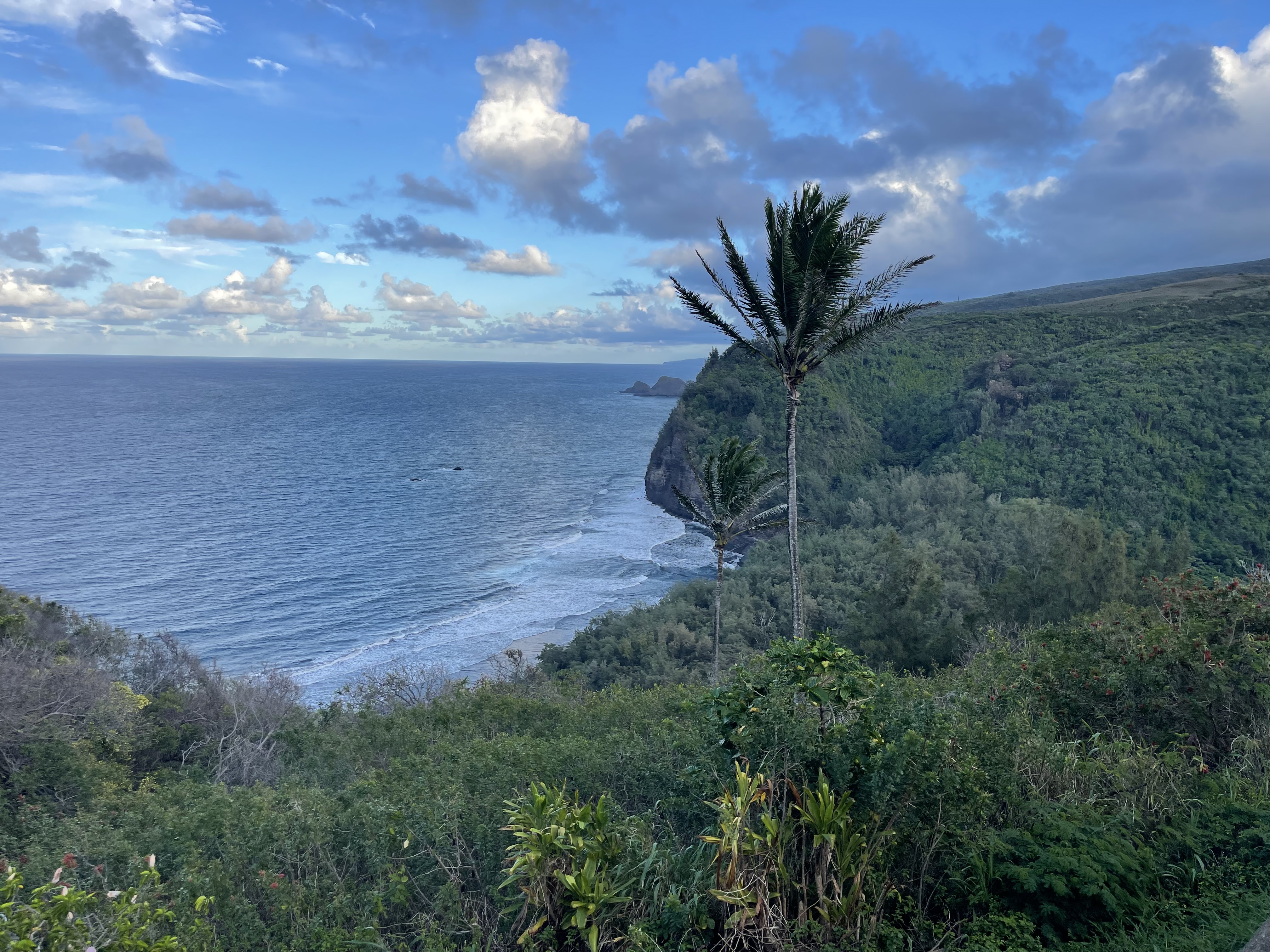
While you can no longer descend into the valley, you can still witness its breathtaking beauty from the Waipiʻo Valley Overlook. This public scenic point offers a stunning panoramic view of the valley's mouth, the black sand beach, and the dramatic coastline stretching to the northeast. It remains the primary and only way for the general public to experience the grandeur of Waipiʻo Valley.
From the overlook, you can appreciate the scale of the cliffs and the lushness of the landscape. On a clear day, the view is one of the most magnificent on the island. It’s a place for quiet contemplation and to appreciate the power of nature and history.
The Waipiʻo Valley Overlook: What to Expect
The overlook is located at the end of the Hāmākua Heritage Corridor drive, just past the small town of Honokaʻa. It’s a small park with limited parking.
- Parking: There are only a handful of parking spots available. The area can get crowded, especially mid-day. Be patient and prepared to wait for a spot, or consider visiting early in the morning or late in the afternoon.
- The View: A short, paved path leads to the viewing area. You’ll be looking down and east across the mouth of the valley. You can see the river winding its way to the sea and the powerful surf crashing on the black sand beach. Note that Hiʻilawe Falls is located deep within the valley and is not visible from the overlook.
- Facilities: There are portable toilets but no other services. There is no food, water, or gas available at the overlook, so come prepared.
- Best Time to Visit: Early morning light is often best for photography. The overlook faces east, so the sun will be behind you as it rises, illuminating the cliffs and coastline. Late afternoon can also be beautiful, but the valley may be in shadow.
A Deeper Look: The Muliwai Trail and Waimanu Valley
For serious backpackers, Waipiʻo Valley has traditionally been the starting point for the grueling but rewarding Muliwai Trail, which leads to the even more remote and pristine Waimanu Valley. The trailhead is located on the far side of the Waipiʻo Valley floor.
Due to the road closure, hikers can no longer access the Muliwai Trail via Waipiʻo Valley. The State of Hawaiʻi Division of Forestry and Wildlife (DOFAW), which manages the trail and Waimanu campground, has stated that there is no alternate access. Anyone with a permit for Waimanu Valley camping must also be a permitted Waipiʻo resident or have authorized access to cross the valley to reach the trailhead. For the foreseeable future, this incredible hike is inaccessible to the general public.
Respectful Visitation: Your Kuleana
Visiting the Waipiʻo Valley Overlook comes with a kuleana, or a responsibility, to be a respectful visitor. This is a sacred area for Native Hawaiians and home to a small, tight-knit community.
- Be Mindful of Residents: Do not block the road or driveways. Residents still need to use the road to get to and from their homes. Be courteous and allow them to pass.
- Keep it Quiet: This is a place of reverence, not a loud party spot. Appreciate the view with a quiet sense of awe.
- No Drones: Flying drones here is highly disrespectful. It intrudes on the privacy of residents and disrupts the serene, sacred atmosphere of the valley.
- Pack It In, Pack It Out: Leave no trace. Take all of your trash with you. Let's all help keep this beautiful place pristine.
- Heed All Signs: Obey all posted signs regarding parking and access. Do not attempt to hike down the road; you will be turned away and may face a fine.
What's Nearby? Exploring the Hāmākua Coast
After visiting the overlook, take time to explore the beautiful Hāmākua Coast. The region is full of charming towns, other natural wonders, and scenic drives.
- Honokaʻa: This historic sugar town is the gateway to Waipiʻo. It has a great collection of boutiques, galleries, and local eateries. It's a perfect place to grab lunch before or after your visit.
- ʻAkaka Falls State Park: About 45 minutes south of the overlook, this park features the stunning 442-foot ʻAkaka Falls, accessible via a beautiful and easy loop trail through a rainforest.
- Laupāhoehoe Point Beach Park: A peninsula with a tragic history (it was devastated by the 1946 tsunami), Laupāhoehoe Point is now a beautiful park with dramatic ocean views and picnic areas.
- Hāmākua Scenic Drive: A portion of the old Mamalahoa Highway winds through lush jungle, past waterfalls, and over old bridges. It's a beautiful, slower-paced alternative to the main highway.
While the days of exploring the valley floor are on hold, a visit to the Waipiʻo Valley Overlook remains an essential Big Island experience. It offers a powerful glimpse into Hawaiʻi's history, culture, and stunning natural world. For more trip planning resources, visit our main site at https://highendhawaii.com.
Related Reading
- A Guide to the Hāmākua Coast Scenic Drive: /blog/hamakua-coast-scenic-drive
- The Best Scenic Overlooks on the Big Island: /blog/best-big-island-scenic-overlooks
- Understanding Hawaiian Culture for Visitors: /blog/understanding-hawaiian-culture