A Traveler’s Guide to Hawaiian History on the Big Island
The Big Island of Hawaiʻi is a living museum, where epic tales of gods, chiefs, and kings are etched into the volcanic landscape. Discover the island's profound history, from ancient settlements to the unification of the kingdom.
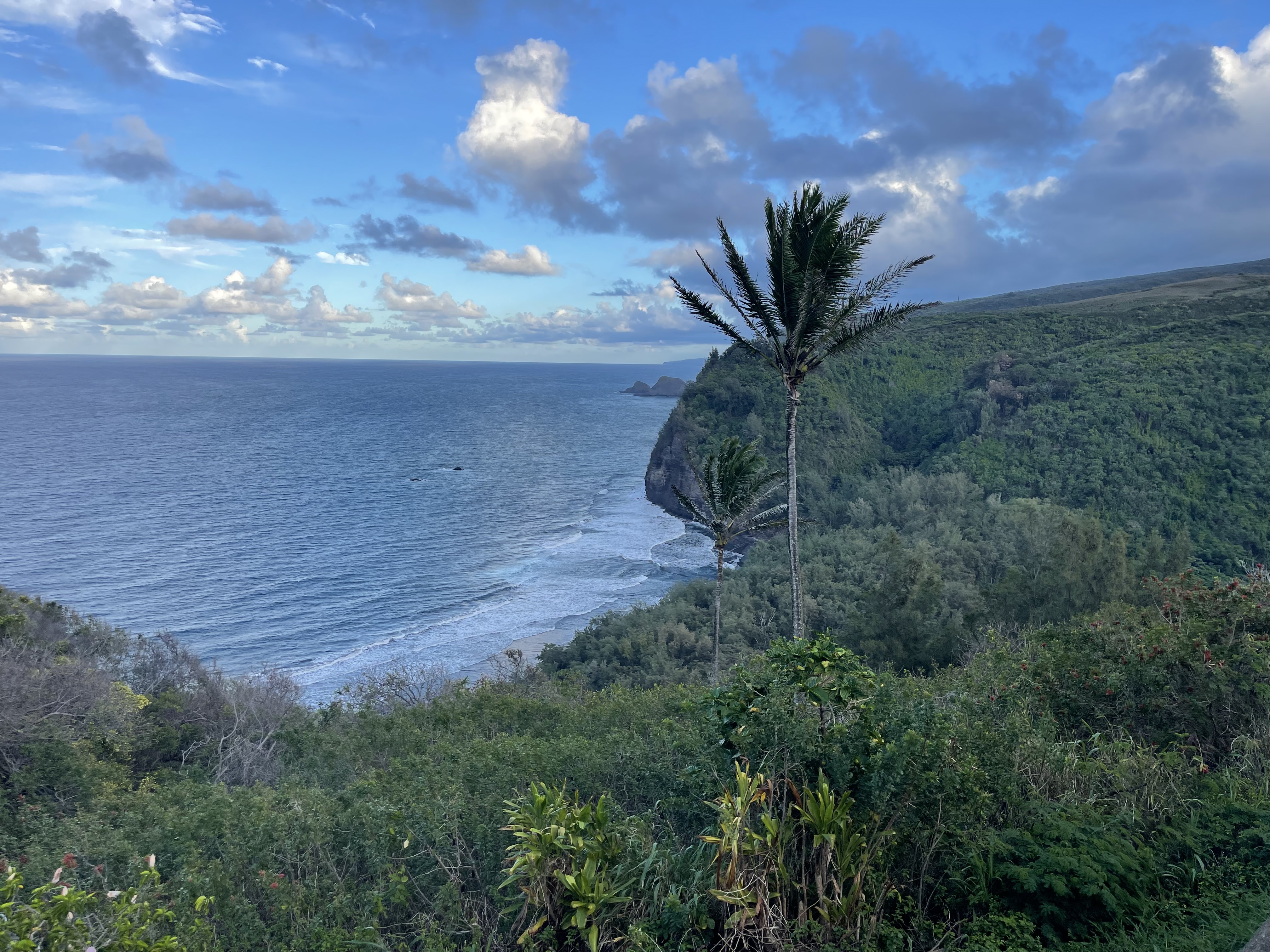
The story of Hawaiʻi is written across the Big Island's vast landscapes. Here, on the archipelago’s largest and youngest island, the grand sagas of Polynesian creation, chiefly power, foreign contact, and kingdom unification unfolded. To visit the Big Island is to walk through living history, where ancient temples stand near royal palaces and the echoes of the past resonate in the island's place names and cultural practices.
Unlike a museum, where history is kept behind glass, the history of Hawaiʻi Island is accessible, tangible, and deeply connected to the ʻāina (land). From the petroglyph fields of the Kohala Coast to the sacred refuge of Puʻuhonua o Hōnaunau, this guide will help you connect with the island's profound past.
The First Navigators: Settlement from the South Pacific
Long before Western ships appeared on the horizon, master navigators from the South Pacific set out on epic voyages of discovery. Using only the stars, sun, winds, and currents, these Polynesian wayfinders sailed thousands of miles in double-hulled voyaging canoes. The first settlers of Hawaiʻi are believed to have arrived from the Marquesas Islands as early as 400 AD, bringing with them essential plants like kalo (taro), ʻulu (breadfruit), and kō (sugarcane), as well as foundational cultural practices.
They established a society deeply intertwined with the natural world, organized around the ahupuaʻa, a sophisticated land division system that typically ran from the mountains to the sea. This system ensured that communities had access to all the resources necessary for survival, fostering a sustainable relationship with the land. Their world was one of gods and spirits, where every rock, plant, and animal had a place in a complex and meaningful cosmology. The evidence of their lives is still visible in the remnants of their villages, agricultural sites, and heiau (temples).
Kapu: The Sacred Social Order
Ancient Hawaiian society was governed by the kapu system, a complex set of laws and prohibitions that regulated every aspect of life, from politics and religion to daily activities. The word 'kapu' is the source of the English word 'taboo.' This system maintained social order and spiritual balance, defining relationships between people, the gods, and the land.
Society was highly stratified:
- Aliʻi Nui: The high chiefs who were considered descendants of the gods and held supreme political and spiritual power.
- Kahuna: Priests and master craftsmen who served as spiritual advisors, healers, and keepers of sacred knowledge and genealogies.
- Makaʻāinana: The common people—farmers, fishermen, and laborers—who formed the backbone of society.
- Kauwā: A small outcast or slave class, often prisoners of war or their descendants.
Breaking a kapu, whether intentionally or accidentally, was a grave offense believed to anger the gods and bring disaster upon the community. Punishments were severe, often resulting in death. The only hope for a kapu-breaker was to flee to a puʻuhonua, or place of refuge.
Kealakekua Bay and the Arrival of Captain Cook
In January 1779, a profound and irreversible change came to Hawaiʻi. British explorer Captain James Cook, commanding the HMS Resolution and HMS Discovery, sailed into Kealakekua Bay on the Kona coast. His arrival coincided with the Makahiki festival, an annual celebration honoring the god of fertility and peace, Lono. The sails of Cook's ships resembled the banners associated with Lono, leading some Hawaiians to believe he was the returning deity.
He was received with great honor by Chief Kalaniʻōpuʻu. However, relations grew strained as the British overstayed their welcome. After departing, the ships were damaged in a storm and forced to return to Kealakekua for repairs. By now, the Makahiki season was over, and the perception of Cook had shifted. Tensions escalated over a stolen cutter boat, culminating in a violent confrontation on the shore. On February 14, 1779, Captain Cook was killed.
Today, a white obelisk marks the approximate location of his death on the northern shore of Kealakekua Bay. The site, managed by the British government, is best reached by boat or a strenuous hike.
The Rise of Kamehameha the Great
The Big Island is the birthplace of one of Hawaiʻi's most legendary figures: Paiʻea Kamehameha. Born in North Kohala around 1758, a comet is said to have lit the sky, a sign interpreted by kahuna as heralding the arrival of a great leader who would conquer all others. Raised in seclusion to protect him from rival chiefs, Kamehameha grew into a formidable warrior and a brilliant military and political strategist.
Following the death of his uncle Kalaniʻōpuʻu, Kamehameha battled his cousin Kīwalaʻō for control of the island. His decisive victory at the Battle of Mokuʻōhai in 1782 gave him control of Kona, Kohala, and Hāmākua. From his base on the Big Island, he embarked on a decades-long campaign to unite the entire archipelago.
He commissioned the construction of the massive Puʻukoholā Heiau in Kawaihae, a temple dedicated to his war god Kūkaʻilimoku. The U.S. National Park Service (NPS) now manages this impressive site, which you can visit today. Upon its completion in 1791, Kamehameha's power grew, and by 1810, he had brought all the Hawaiian Islands under his singular rule, establishing the Hawaiian Kingdom and earning the title Kamehameha the Great. This remarkable achievement ended the constant warfare between warring chiefdoms and ushered in an era of peace and prosperity.
Puʻuhonua o Hōnaunau: A Sacred Place of Refuge
One of the most powerful and well-preserved historical sites in all of Hawaiʻi is Puʻuhonua o Hōnaunau National Historical Park on the South Kona coast. This was the spiritual sanctuary for those who had broken a kapu, as well as for defeated warriors and non-combatants in times of war. If they could reach the puʻuhonua's boundaries, they would be absolved by a kahuna and granted refuge.
Walking through the park today feels like stepping back in time. A massive stone wall, over 1,000 feet long and 10 feet high, separates the royal grounds from the place of refuge. The grounds contain several reconstructed hale (thatched buildings), kiʻi (carved wooden images of gods), and the restored Hale o Keawe, a temple that once housed the bones of 23 deified chiefs. The NPS has done an excellent job of preserving the site's mana (spiritual power) and providing interpretive information for visitors. It's a place for quiet contemplation and respect.
Kailua-Kona: The Kingdom's First Capital
After unifying the islands, Kamehameha I moved his royal court to the sunny shores of Kailua-Kona. For a time, this vibrant seaside village served as the first capital of the Hawaiian Kingdom. Kamehameha spent his final years here, overseeing his kingdom from Kamakahonu, his personal residence at the northern end of Kailua Bay. The ʻAhuʻena Heiau on the site was restored by Kamehameha as a temple dedicated to Lono, where he prayed for peace and prosperity for his new kingdom.
Across the bay stands Huliheʻe Palace, a later royal residence built in 1838. Today it's a museum showcasing Victorian-era artifacts from the time of King Kalākaua and Queen Kapiʻolani. Directly across the street is Mokuʻaikaua Church, Hawaiʻi's first Christian church, constructed in 1820 by the first missionaries to arrive in the islands. The juxtaposition of these sites tells the story of a culture in rapid transition.
The End of an Era: Breaking the Kapu
When Kamehameha the Great died in 1819 at Kamakahonu in Kailua-Kona, the foundations of the traditional Hawaiian world began to crumble. His son, Liholiho (Kamehameha II), inherited the throne, but Kamehameha's favorite wife, the powerful Queen Kaʻahumanu, held much of the political influence as kuhina nui (co-regent).
Kaʻahumanu, along with Liholiho's mother Keōpūolani, had grown to question the kapu system. Six months after Kamehameha's death, they persuaded the young king to defy the gods. At a feast in Kailua-Kona, Liholiho publicly sat and ate with the women, an act that shattered one of the most fundamental kapu. This event, known as the ʻAha ʻAina Noa (Free Eating), signaled the end of the old religious system. Temples were abandoned and kiʻi were toppled, creating a spiritual vacuum just before the arrival of the first American Christian missionaries the following year.
History's Living Legacy
The Big Island’s history is not confined to the past. It is a living force that shapes the present. You can feel it when you visit the active lava flows of Kīlauea, the domain of the volcano goddess Pele. You can see it in the reverence for Mauna Kea as a sacred place for connecting with the heavens. You can hear it in the chants and see it in the movements of hula, which continue to tell the stories of gods and chiefs.
When you visit these places, do so with respect and an open heart. Understand that you are a guest in a land with a deep, complex, and sometimes painful history. By taking the time to learn, you can move beyond being a mere tourist and become a more mindful traveler. If you are planning a trip to experience these incredible sites, the experts at https://highendhawaii.com can help you craft an itinerary that respectfully explores the island's culture and history.
Related Reading
- A Visitor's Guide to Puʻuhonua o Hōnaunau National Historical Park (/blog/puuhonua-o-honaunau-guide)
- Exploring Historic Kailua-Kona Town (/blog/kailua-kona-travel-guide)
- Cultural Etiquette for Your Trip to Hawaiʻi (/blog/big-island-cultural-etiquette)