A Practical Guide for Your Thurston Lava Tube Visit (Nāhuku)
Explore Nāhuku, the famed Thurston Lava Tube in Hawaiʻi Volcanoes National Park. Our guide helps you navigate this popular attraction from its rainforest walk to the cavernous tube itself.
Thurston Lava Tube, or Nāhuku, is one of the most popular stops in Hawaiʻi Volcanoes National Park, and for good reason. This easily accessible cavern offers a fascinating glimpse into the plumbing of a volcano, set within a breathtakingly lush rainforest. But its popularity is also its biggest challenge; crowds and a tiny parking lot can sour the experience. This guide will help you plan your visit to enjoy the magic of Nāhuku without the hassle.
What is Thurston Lava Tube (Nāhuku)?
Nāhuku is a 500- to 600-year-old lava tube formed during an eruption of Kīlauea. As a river of molten pāhoehoe lava flowed, its outer surface cooled and hardened, creating a crust. When the eruption ceased and the lava drained away, a hollow cave-like tunnel was left behind. These are common features on shield volcanoes, but Nāhuku is one of the most well-preserved and accessible examples in the world.
Its Hawaiian name, Nāhuku, means "the protuberances," which may refer to the lava drippings (now gone) that once covered its ceiling. Discovered in 1913 by journalist Lorrin Thurston, the tube was originally a pristine cave environment. Unfortunately, early visitors removed the delicate lava stalactites as souvenirs. The National Park Service (NPS) now protects the site, allowing millions to experience its geologic wonder.
The tube itself is about 600 feet long, with a ceiling that reaches over 20 feet high in places, making it feel surprisingly spacious and open.
Getting There & Parking: The Biggest Challenge
Thurston Lava Tube is located on Crater Rim Drive, a short drive from the Kīlauea Visitor Center within Hawaiʻi Volcanoes National Park. The turn-off is well-signed. The real issue isn't finding it, but parking there.
The dedicated parking lot is notoriously small, with only about 15-20 spots. Between 10 a.m. and 2 p.m., it's common to see a line of cars waiting for a spot to open up, which can take a long time.
Our Strong Recommendation: Skip the main lot entirely. Instead, park at the Kīlauea Iki Overlook, located about a half-mile before the Nāhuku turn-off (if you're coming from the Visitor Center). From the overlook, a beautiful, mostly flat path runs parallel to the road, leading you directly to the Nāhuku trailhead. It's a pleasant 10-minute walk through the forest that is far more enjoyable than circling a crowded parking lot.
The Thurston Lava Tube Experience: A Walk-Through
The entire Nāhuku loop trail is about 0.4 miles (0.6 km) and takes 15-20 minutes, though you may want to linger.
The Descent into the Rainforest
The experience begins immediately. You'll leave the roadside and descend a short, paved slope into a wonderland. The air cools, and the forest becomes a dense canopy of giant Hāpuʻu tree ferns. This prehistoric-looking landscape is a a pit crater, a collapsed area that has since become a thriving ecosystem. Listen for the calls of native birds like the crimson ʻapapane and the yellow-green ʻamakihi that flit through the ʻōhiʻa trees.
Entering the Lava Tube
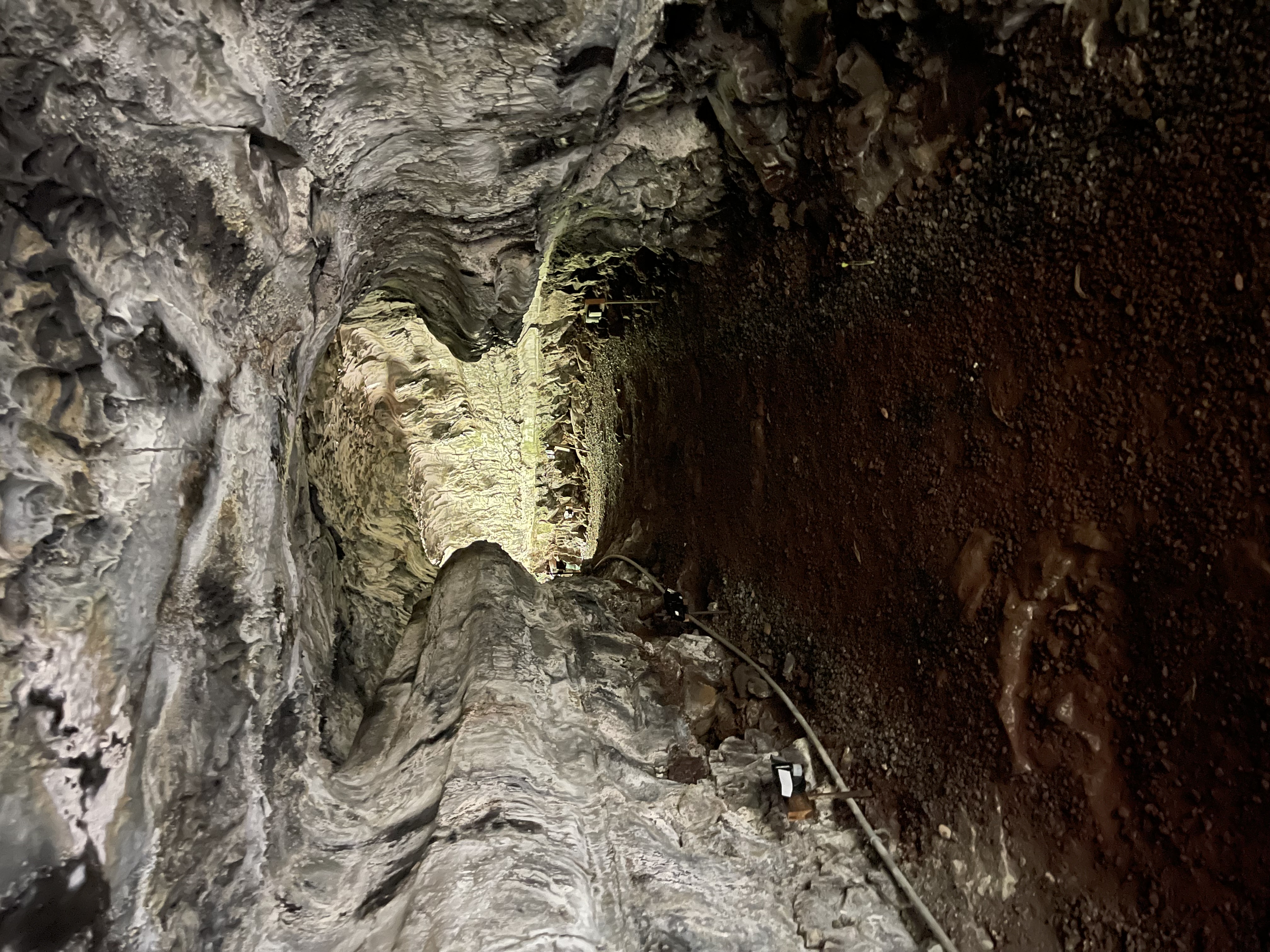
At the bottom of the descent, you'll cross a small bridge to the mouth of the lava tube. The entrance is a dark, dramatic opening in the rock face. As you step inside, the temperature drops noticeably, and the sounds of the forest fade, replaced by the hushed echo of the cavern.
According to the NPS, the tube is electrically lit from 8:00 a.m. to 8:00 p.m. daily. The lighting is subtle, designed to illuminate the path while preserving the cave's natural atmosphere. The floor is flat and relatively smooth, making it an easy walk.
Inside Nāhuku
Walking through the tube is a unique experience. Look at the walls to see the different textures left by the flowing lava. The ceiling is high, so it doesn't feel claustrophobic for most people. While the delicate lava stalactites are gone, you can still appreciate the immense power and scale of the volcanic forces that created this tunnel.
The tube curves gently, so you can't see the exit from the entrance, adding to the sense of discovery. It's a short walk, but take your time. Let your eyes adjust and imagine a river of 2,000°F lava flowing where you now stand.
Exiting the Tube
The path leads you out of a different opening and back into the lush rainforest. From here, a gentle uphill trail loops you back towards the road and your starting point, completing the loop.
Best Times To Visit (And When to Avoid)
Timing is everything at Nāhuku. Your experience can range from a serene walk through nature to a crowded shuffle through a tunnel.
- The Best Time: Arrive before 9:00 a.m. or after 4:00 p.m. In the early morning, you might have the place almost to yourself. The late afternoon is also beautiful as the light filters through the ferns, and the big tour buses have usually departed for the day.
- The Busiest Time: Absolutely avoid the hours between 10:00 a.m. and 2:00 p.m. This is peak time for tour groups and general visitors.
- The Adventurous Time: Visit after 8:00 p.m. when the lights are turned off. The trail is open 24/7. Exploring the tube by the beam of your own headlamp or flashlight is a completely different, thrilling experience. You will hear the drips and feel the immense darkness, getting a more authentic caving feel. Do not attempt this without a reliable light source for every person in your group.
What to Bring and Wear
Preparation is minimal but important for an enjoyable visit.
- Sturdy Shoes: The paved path can be damp and slippery. Closed-toe shoes are recommended.
- Light Jacket or Raincoat: The rainforest setting and the cool cave interior can be chilly, even on a warm day. Rain is common.
- Water: Always a good idea when hiking in the park.
- Flashlight/Headlamp: Essential if you plan to visit after 8:00 p.m., but also handy during the day to inspect the lava tube walls more closely.
- National Park Entrance Pass: Nāhuku is inside Hawaiʻi Volcanoes National Park, which requires an entrance fee. A private vehicle pass is valid for 7 days.
For those planning a full Big Island itinerary, from volcanoes to luxury stays, resources like High End Hawaii can provide a broader perspective on travel across the island.
Nāhuku is a true gem of the park. It's a place where geology, biology, and history intersect in a powerful way. With a little planning to avoid the crowds, your visit to Thurston Lava Tube will be a memorable highlight of your time on the Big Island.