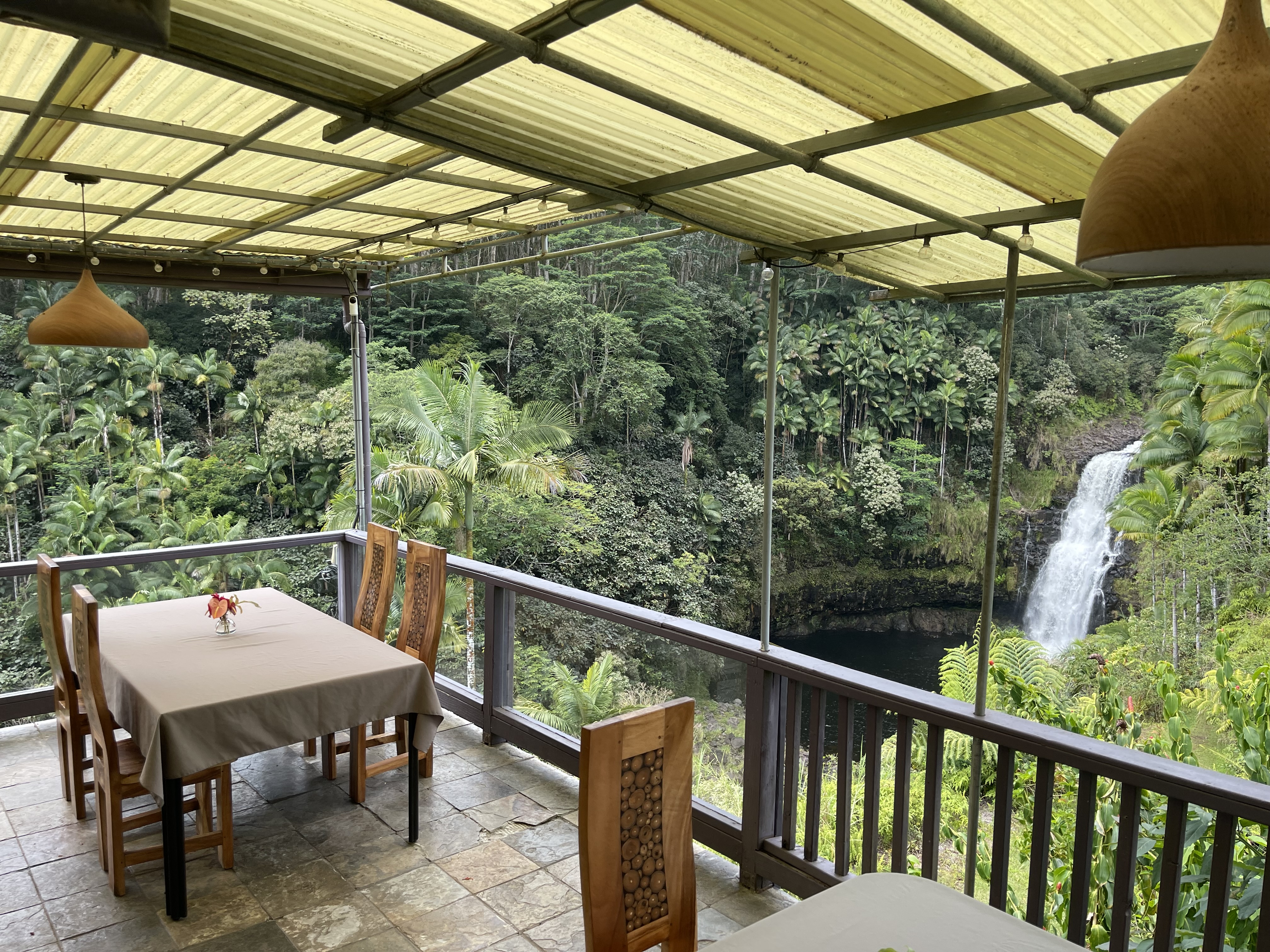
A Visitor's Guide to Rainbow Falls (Waiānuenue) in Hilo
One of Hilo's most accessible waterfalls, Rainbow Falls (Waiānuenue) is famous for the rainbows that form in its mist on sunny mornings. Here's what you need to know.
Rainbow Falls, or Waiānuenue, is one of the most iconic and easily accessible natural wonders on the Big Island. Located just minutes from downtown Hilo, this powerful 80-foot waterfall cascades over a natural lava cave into a large pool below, all framed by lush tropical foliage. Its fame comes from the beautiful rainbows that appear in its mist on sunny mornings, a magical sight that lives up to its name.
Unlike many of Hawaiʻi's other famed waterfalls that require strenuous hikes, Rainbow Falls is remarkably easy to visit. It’s the centerpiece of Wailuku River State Park, offering a rewarding experience for all ages and mobility levels without requiring a long-term commitment. It's the perfect stop on a Hilo-focused itinerary or on your way to Hawaiʻi Volcanoes National Park.
What Makes Rainbow Falls So Special?
The Waiānuenue you see today is a product of the Wailuku River carving its path through ancient lava flows from Mauna Loa. The waterfall plunges 80 feet (24 meters) over the lip of a large lava cave. The constant mist feeds the surrounding mango trees and vibrant monstera, creating a scene that feels quintessentially tropical.
The main event, of course, is the rainbow. On clear mornings, as the sun rises over Hilo, its rays hit the waterfall's mist at just the right angle, creating a vivid rainbow. The best viewing for this phenomenon is typically between 9 AM and 10 AM, but rainbows can appear any time the sun is out and low in the sky.
The volume and color of the water can change dramatically. After a heavy Hilo rain, the waterfall becomes a raging, churning torrent of brown water, showcasing the raw power of the Wailuku River. During drier periods, the falls can be more gentle and segmented, offering a clearer view of the lava rock behind it.
The Moʻolelo (Legend) of Hina
Hawaiian landmarks are rich with moʻolelo (stories, legends), and Rainbow Falls is no exception. The large cave behind the waterfall is said to be the home of Hina, the goddess of the moon and mother of the demigod Māui.
According to legend, one day a giant moʻo (lizard) named Kuna tried to drown Hina by blocking the entrance to her cave with the river's flow. Hina called to Māui for help. Using his quick thinking and demigod strength, Māui paddled his canoe from the ocean up the Wailuku River. He battled the moʻo, eventually chasing him upstream and defeating him at the pools now known as Boiling Pots. The legend adds a deep layer of cultural significance to the beauty of the falls, reminding visitors that these are sacred places.
A Practical Guide for Your Visit
Visiting Rainbow Falls is straightforward, making it an easy addition to any itinerary.
- Location: Wailuku River State Park, Rainbow Drive, Hilo, HI 96720
- Cost: Free. There is no admission fee or parking charge.
- Hours: Wailuku River State Park is generally open during daylight hours. There are no gates that close.
- Parking: A dedicated parking lot is available right next to the viewing area. It can fill up during peak times (mid-morning), but turnover is quick as most visits are short.
- Accessibility: The main viewing platform is paved and just a few steps from the parking lot, making it wheelchair and stroller accessible.
To reach the falls from downtown Hilo, simply drive west on Waiānuenue Avenue for about 1.5 miles. The road leads directly to the park entrance.
When is the Best Time to Go?
Timing your visit can significantly enhance your experience.
| Factor | Best Time | Why? |
|---|---|---|
| Time of Day | 9 AM - 10 AM | This is the optimal window for the sun's angle to create the famous rainbows in the mist. It also helps you beat the largest tour bus crowds that arrive later in the morning. |
| Weather | A sunny morning after rainfall | Rain is what powers the falls. A visit after a night of rain means the waterfall will be full and impressive. Add a sunny morning, and you have the perfect recipe for a vibrant rainbow. |
| Crowds | Early Morning or Late Afternoon | The busiest time is from 10 AM to 2 PM. Visiting before 9 AM or after 3 PM will give you a more peaceful experience, though you may miss the rainbow. |
Since Hilo is one of the wettest cities in the United States, be prepared for at least a passing shower any time of year. Don't let a little rain deter you; it's what makes the East side of the Big Island so lush and green.
Safety at Rainbow Falls: This is Important
While beautiful, the Wailuku River is the most dangerous river in the state of Hawaiʻi. Please prioritize safety during your visit.
DO NOT SWIM. Swimming at Rainbow Falls or anywhere in the Wailuku River below the falls is strictly prohibited and incredibly dangerous. The river is notorious for sudden flash floods, which can occur without warning even if it's not raining where you are. Rain upstream can send a wall of water downriver in minutes. The currents are deceptively strong, and there are underwater hazards.
According to the State of Hawaiʻi's Division of State Parks, visitors should:
- Stay on marked trails and within designated viewing areas.
- Heed all warning signs and respect any closures or barriers.
- Never climb on the rocks near the river's edge.
- Supervise children closely at all times.
The upper viewpoint, accessible via a short flight of stairs to the left of the main viewing area, offers a different perspective and a view of the forest above the falls. Be cautious on the stairs, as they can be slippery when wet.
Photography Tips for Rainbow Falls
Want to capture that perfect shot? Here are a few tips:
- Go in the morning: As we've stressed, this is key for the rainbow.
- Use a polarizing filter: This will cut down on glare from the water and foliage and make the colors of the rainbow pop dramatically.
- Bring a wide-angle lens: To capture the full scope of the waterfall and its lush surroundings.
- Use a tripod: For long-exposure shots that create a silky, smooth effect on the water. You'll need a tripod to keep the camera steady for the slow shutter speed required.
- Experiment with shutter speed: A fast shutter speed (like 1/500s) will freeze the water droplets, while a slow shutter speed (like 1/2s) will create the classic milky look.
Exploring the Area: What's Nearby?
Rainbow Falls is just one part of the Wailuku River State Park. After your visit, consider exploring these other nearby spots. Combining these stops makes for a fantastic half-day Hilo adventure, which you can easily build into a larger trip plan like our Big Island 7-day Itinerary.
Boiling Pots & Peʻepeʻe Falls
Just a mile and a half upstream from Rainbow Falls is the Boiling Pots section of the park. Here, the river flows through a series of terraced basalt lava pools. During periods of heavy flow, the water churns and bubbles in a way that resembles boiling water. Peʻepeʻe Falls can be seen from the viewpoint here as well. The same safety warnings apply: do not swim.
Kaūmana Caves State Park
A short drive away, you can explore a massive lava tube formed by a Mauna Loa eruption in 1881. A set of concrete stairs leads down into the mouth of the cave. You can explore a short distance into the dark, cool tube. Bring a flashlight and sturdy shoes.
Downtown Hilo
After exploring the waterfalls, head back to downtown Hilo for lunch. The historic town center is full of charming shops, galleries, and excellent local restaurants. Don't miss the Hilo Farmers Market for tropical fruits and local crafts.
Related Articles:
- A Guide to ʻAkaka Falls State Park (/blog/akaka-falls-state-park-guide)
- Exploring Hilo: Best Things to Do on the Rainy Side (/blog/best-things-to-do-in-hilo)
- Big Island Waterfalls: A Guide to the Best Falls (/blog/big-island-waterfalls-guide)