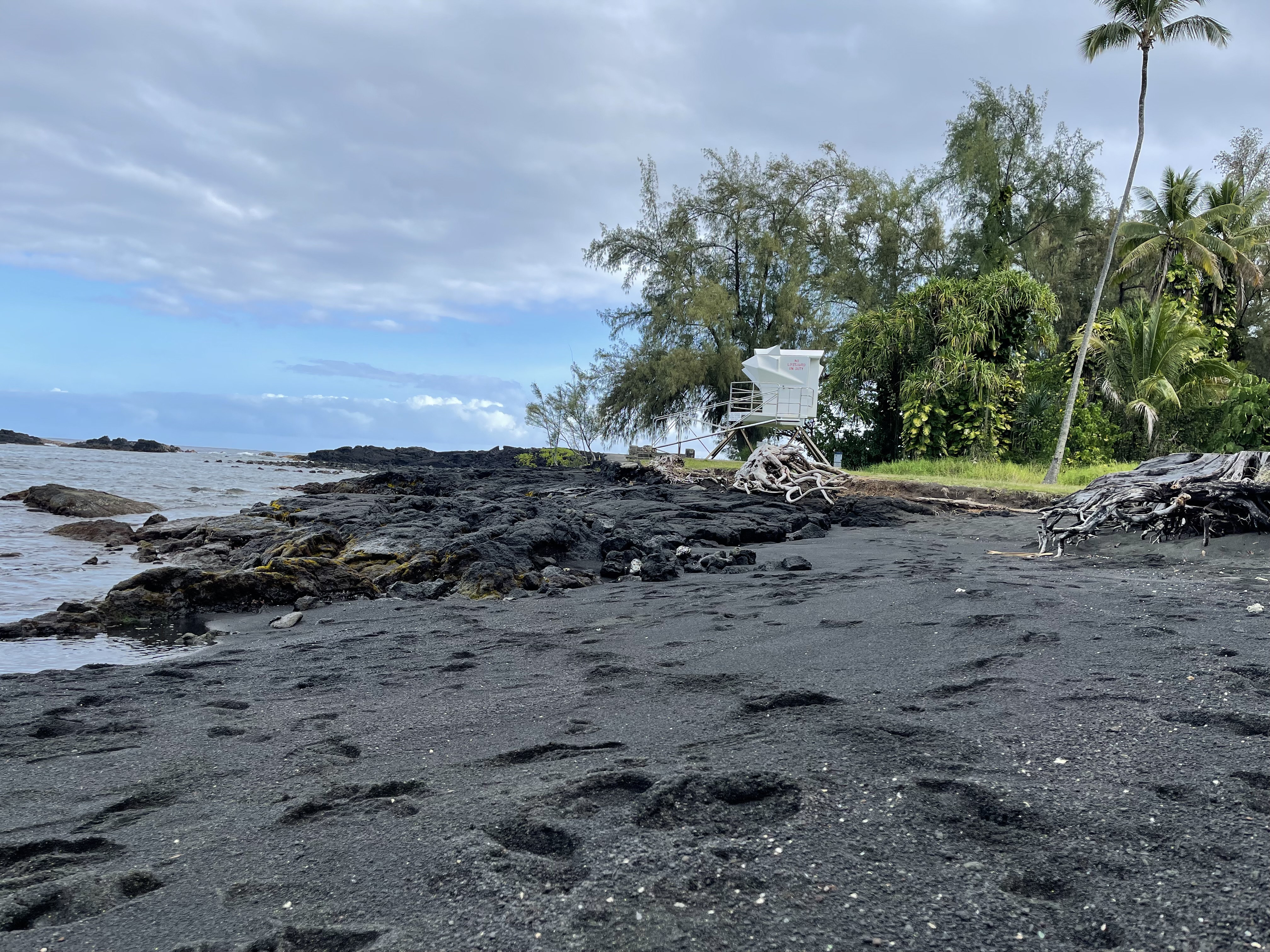
Punaluʻu Black Sand Beach: A Complete Visitor Guide
Famous for its jet-black shores and the Hawaiian Green Sea Turtles (honu) that bask on them, Punaluʻu Black Sand Beach is a must-see stop on the Big Island's spectacular Kaʻū coast.
Punaluʻu Black Sand Beach is one of the most famous and striking beaches in all of Hawaiʻi. Located on the southeastern coast of the Big Island in the vast Kaʻū district, its jet-black sand, fringed by coconut palms and visited by giant sea turtles, creates a scene that feels both prehistoric and quintessentially Hawaiian. A stop here offers more than just a pretty picture; it’s an opportunity to witness unique geology and encounter protected wildlife up close.
While not your typical lay-out-and-tan beach, Punaluʻu is a highlight for many visitors exploring the route between Kailua-Kona and Hawaiʻi Volcanoes National Park. This guide covers everything you need to know for a safe and memorable visit.
What Makes Punaluʻu So Special?
The allure of Punaluʻu is threefold: the sand, the turtles, and the powerful sense of place.
- The Black Sand: Unlike the white coral-based sands of many tropical beaches, the sand at Punaluʻu is made of fine, polished basalt fragments. According to the USGS, this occurs when molten lava from Kīlauea or Mauna Loa flows into the ocean and rapidly shatters upon contact with the cold water. The waves then tumble and smooth these fragments over millennia, creating the beach you see today. It’s coarse underfoot and heats up quickly in the sun, so be sure to wear sandals.
- The Honu (Hawaiian Green Sea Turtles): Punaluʻu is a critical habitat for honu, which are a threatened species protected by state and federal law. They are often seen foraging in the bay or, most famously, hauling themselves onto the black sand to bask in the sun. This behavior helps them regulate their body temperature and rest. It is a remarkable sight, but one that requires the utmost respect from visitors.
- The Freshwater Springs: The name Punaluʻu translates to "spring [of water] dived for." The bay is fed by cold freshwater springs that well up from the sea floor. You can sometimes see this cooler, less dense freshwater shimmering on the surface of the warmer, saltier ocean water. This mix of fresh and saltwater creates a unique aquatic environment.
Getting to Punaluʻu Beach
Punaluʻu Beach Park is located just off Highway 11, the main road that circles the Big Island. It's well-signed and easy to find.
- From Kailua-Kona: The drive is approximately 55 miles (88 km) south, taking about 1 hour and 30 minutes without stops.
- From Hilo: The drive is about 67 miles (108 km) southwest, taking around 1 hour and 45 minutes.
- From Hawaiʻi Volcanoes National Park: It's a convenient 30-minute, 22-mile (35 km) drive south from the park's main entrance.
The turnoff from the highway leads down a short paved road, Ninole Loop Road, to a large parking area with restrooms and picnic facilities.
What to See and Do at Punaluʻu
While you could just make a quick photo stop, it’s worth spending an hour or two to fully experience the area.
Observe the Honu—Respectfully
Seeing a giant honu resting on the sand is the main event for many. They blend in surprisingly well with the black lava rocks at the water's edge. You are very likely to see them, but it's never guaranteed.
Crucial Viewing Rules:
- Keep Your Distance: State and federal guidelines (NOAA) mandate that you stay at least 10 feet (3 meters) away from the turtles at all times, both on land and in the water. Ropes may be in place to mark a respectful distance; do not cross them.
- No Touching, Feeding, or Harassing: Never touch a turtle. It's illegal, stressful for the animal, and can transfer diseases. Do not attempt to feed them or block their path to or from the ocean.
- Use Your Zoom Lens: Bring a camera with a good zoom to get great photos without disturbing the wildlife.
Volunteers are often on-site to educate visitors and ensure the turtles' safety. Please listen to their guidance.
Swimming and Snorkeling
Swimming at Punaluʻu is possible but requires caution. The surf can be rough, and strong currents, especially near the river mouth, can be dangerous. The water is also refreshingly—or shockingly—cold due to the freshwater springs.
- For swimming: The area near the small boat ramp on the northeastern side of the bay is often calmer and more protected. Always watch the conditions and follow the cardinal rule of Hawaiian beaches: never turn your back on the ocean.
- For snorkeling: Visibility is often poor due to the mix of fresh and saltwater and the churning black sand. While you may see turtles in the water, it's not considered a prime snorkeling destination compared to other spots on the island.
Explore the Beach and Ponds
Take a walk along the length of the beach. Feel the coarse volcanic sand between your toes (with shoes on a hot day!). The line of coconut palms provides a stunning contrast to the black sand and blue ocean.
Behind the beach is a large, spring-fed lily pond surrounded by lush vegetation. It's a beautiful, calm area that's great for photos. Look for the non-native birds that frequent the pond.
To the south, on the far side of the bay, you can find the ruins of Kaʻieʻie Heiau, an ancient Hawaiian temple, and a flat rock surface believed to have been a hōlua slide, used for a traditional royal sport.
Safety and Preservation
Your visit plays a role in preserving this special place for generations to come.
Ocean Safety
There are no lifeguards at Punaluʻu. The beach is exposed to open ocean swells, and conditions can change rapidly. Rip currents are a frequent hazard. If you are not a strong, experienced ocean swimmer, it is best to stay on shore or only wade in the shallows on a calm day.
Do Not Take the Black Sand
It is illegal to take sand from any beach in Hawaiʻi (Hawaiʻi Administrative Rules §13-256-51). Beyond being against the law, it is culturally disrespectful. Hawaiian legend holds that taking any rocks or sand from the islands brings bad luck, as you are taking a piece of the volcano goddess Pele. Please, leave Punaluʻu as you found it.
What's Nearby?
Punaluʻu is the perfect stop on a tour of the southern part of the Big Island. Combine your visit with these other nearby attractions in the Kaʻū district:
- Hawaiʻi Volcanoes National Park: Just a short drive north, this is a must-do. Explore volcanic craters, steam vents, and recent lava flows. (Related: /blog/hawaii-volcanoes-national-park-guide)
- Kaʻū Coffee Mill: Stop for a tour and tasting of the delicious coffee grown in the rich volcanic soil of Kaʻū. It's a great alternative to the more crowded Kona coffee region.
- Nāʻālehu: Visit the southernmost town in the United States. Grab a bite at the Punaluʻu Bake Shop, famous for its sweet bread.
- Whittington Beach Park: A few miles south of Punaluʻu, this is another scenic park with ruins of an old sugar mill pier. It's a nice spot for a picnic, though swimming is not advised.
Planning a trip to the Big Island can be a big undertaking, but with a little research, you can craft the perfect adventure. For a comprehensive look at what the island has to offer, check out our guide at https://highendhawaii.com.
Related Reading: