Punaluʻu Black Sand Beach Guide: Turtles, Tips & What to See
Famous for its jet-black shores and the Hawaiian green sea turtles (honu) that rest on them, Punaluʻu Black Sand Beach is a must-see on the Big Island's Kaʻū coast. This guide covers how to visit respectfully and make the most of your time.
Famous for its otherworldly jet-black sand and the resident Hawaiian green sea turtles (honu) that bask upon it, Punaluʻu Beach is one of the most iconic destinations on the Big Island of Hawaiʻi. Located on the remote southeastern Kaʻū coast, a visit here offers a stunning visual contrast of black sand, green palms, and turquoise water. But a rewarding visit requires more than just showing up; it means understanding the environment, the wildlife, and how to be a respectful guest.
This guide provides everything you need to know for a memorable and responsible trip to Punaluʻu, from the geology of its black sand to the strict rules for observing its most famous residents. We'll cover what to expect, what to do, and what's worth skipping.
What Makes Punaluʻu Black Sand Beach So Special?
Punaluʻu isn't just another pretty beach. Its unique character comes from a combination of volcanic geology and its vital role as a habitat for endangered species.
The Black Sand
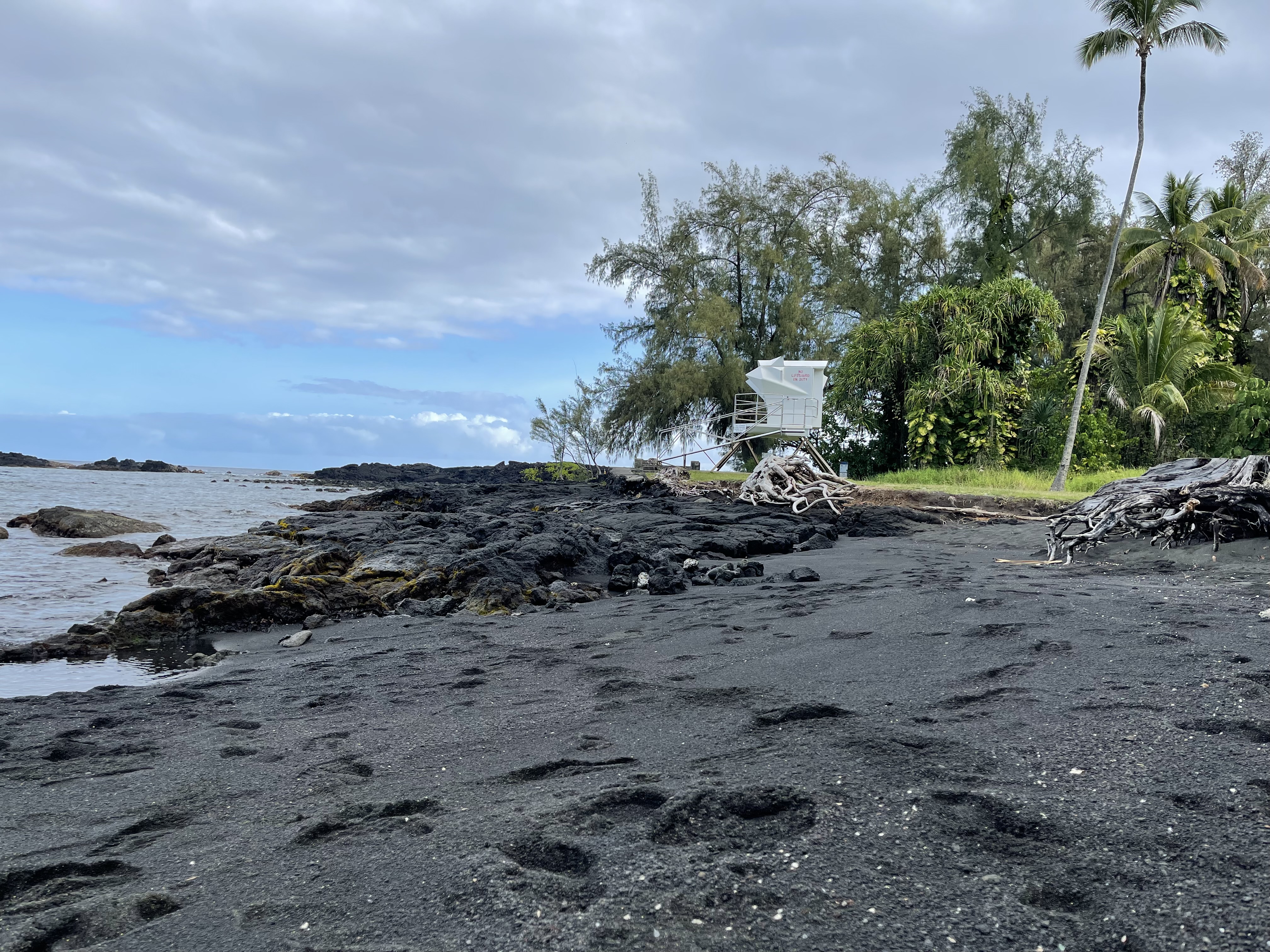
The striking black sand is not sand in the traditional sense, but tiny fragments of basalt. According to the USGS, when molten lava from Kīlauea Volcano's past eruptions flowed into the ocean, the thermal shock caused it to shatter into small, glassy particles. Over millennia, wave action has worn these particles down into the coarse "sand" you see today. Walk barefoot and you'll notice it's much rougher and retains more heat than the fine, white coral sand found elsewhere.
The Honu (Hawaiian Green Sea Turtles)
The main draw for most visitors is the chance to see honu in their natural habitat. Punaluʻu is a critical resting area for these protected marine reptiles. They haul themselves out of the water to bask on the warm black sand, which helps them regulate their body temperature and conserve energy. You may also see the rarer and critically endangered hawksbill turtle (honuʻea), which sometimes nests in the area.
It is a profound privilege to see these animals, and with that comes a great responsibility to keep them safe, which we'll detail below.
The Freshwater Springs
The name Punaluʻu translates to “spring [for] diving.” In ancient Hawaiʻi, and even today, freshwater springs percolate from the ground and emerge from the ocean floor just offshore. Hawaiians would dive to collect this cool, fresh water. These same springs make the ocean water here noticeably colder than at other Big Island beaches, creating bracing, sometimes shocking, pockets of chilly water as you wade in.
Your Visit to Punaluʻu: A Practical Guide
Planning your trip to this remote corner of the island is straightforward, but knowing the logistics will make it much smoother.
Getting There
Punaluʻu Beach Park is located just off Highway 11, about 56 miles south of Hilo (a 75-minute drive) and 66 miles south of Kailua-Kona (a 90-minute to 2-hour drive). The turnoff onto Alanui Road is clearly marked. It's a popular stop for those driving between Volcano and Kona or making a full-day trip to Hawaiʻi Volcanoes National Park, which is only about 30 minutes away.
Parking & Facilities
The beach park has a paved parking lot, but it often fills up by mid-morning, especially when tour buses arrive. Arriving early (before 10 a.m.) or late in the afternoon is your best bet for easy parking.
Facilities are decent for a remote park and include:
- Restrooms
- Outdoor showers for rinsing off sand and salt
- Shaded picnic tables
- A paved walking path along the beachfront
There are no lifeguards on duty. The ocean conditions can be hazardous, and you enter the water at your own risk.
Observing Honu: The 10-Foot Rule is Law
Seeing a turtle is the highlight of any visit, but it's crucial to do it respectfully. These are wild, protected animals.
Stay at least 10 feet (3 meters) away from any turtle, both on sand and in the water. This is the guideline recommended by the National Oceanic and Atmospheric Administration (NOAA) and local conservation groups. Often, a rope barrier is set up around basking turtles to help visitors maintain a safe distance. Do not cross it.
Why the Distance Matters
Turtles come ashore to rest, not to interact with people. Approaching them causes stress, interrupts their rest, and can make them see the beach as unsafe. Over time, this can lead them to abandon the habitat. You are a guest in their home.
Rules for Turtle Viewing:
- Never Touch a Turtle: Touching a sea turtle is illegal under state and federal law, with severe fines.
- Do Not Feed Them: Feeding wildlife is harmful to their health and disrupts natural behaviors.
- Use Your Zoom Lens: Bring a camera with a good zoom to get great photos without disturbing the animals.
- Keep Your Voice Down: Loud noises can be stressful for wildlife.
- No Flash Photography: Avoid using a flash, as it can startle the turtles.
Swimming and Snorkeling at Punaluʻu
While the beach is beautiful, it's not a premier swimming or snorkeling spot. It's important to set realistic expectations.
Swimming
The shorebreak can be powerful, and rip currents are common. The ocean floor drops off quickly in some areas, and the cold freshwater springs can be jarring. This is not a safe beach for children or inexperienced swimmers. The safest spot for a dip is often the small, shallow channel near the boat ramp on the north end of the beach, but always assess the conditions before entering.
Snorkeling
Snorkeling is generally poor at Punaluʻu. The black sand gets churned up by the surf, leading to low visibility. While you might see a turtle swim by, you won't see much else. There are far better snorkeling destinations on the Kona coast, like Kealakekua Bay or Two Step at Hōnaunau Bay.
What’s Nearby? Exploring the Kaʻū District
Punaluʻu is the perfect anchor for a day of exploring the wild and beautiful Kaʻū district.
- Hawaiʻi Volcanoes National Park: Just a 30-minute drive north, combining a visit to Punaluʻu with a day in the park is a classic Big Island itinerary. See Kīlauea's crater, walk through lava tubes, and explore volcanic landscapes.
- Punaluʻu Bake Shop: Located in the nearby town of Nāʻālehu, this is a legendary stop. Famous for its sweet bread and malasadas (Portuguese donuts), it's the perfect place for a post-beach snack. It proudly calls itself the "Southernmost Bakery in the USA."
- Kaʻū Coffee Mills: The Kaʻū coffee region is gaining international acclaim. Stop by a local mill for a tour to learn how coffee is grown and processed, followed by a tasting.
- Whittington Beach Park: Just a few minutes south of Punaluʻu, this is another scenic spot with the ruins of an old pier. It's a quieter park, great for a picnic lunch.
- South Point (Ka Lae): About a 30-minute drive from the Punaluʻu turnoff, Ka Lae is the southernmost point of the United States. It's a windswept, dramatic landscape with stunning cliifs, but be extremely cautious of the powerful ocean currents if you visit.
Planning a comprehensive tour of the island's many natural wonders can be complex. For a perfectly tailored adventure, our Big Island travel specialists can handle all the details, from lodging to exclusive tours.
Related Reading
- A Guide to the Best Beaches on the Big Island: /blog/best-big-island-beaches
- Your Guide to Hawaiʻi Volcanoes National Park: /blog/hawaii-volcanoes-national-park-guide
- Discovering the Green Sand Beach (Papakōlea): /blog/papakolea-green-sand-beach-guide