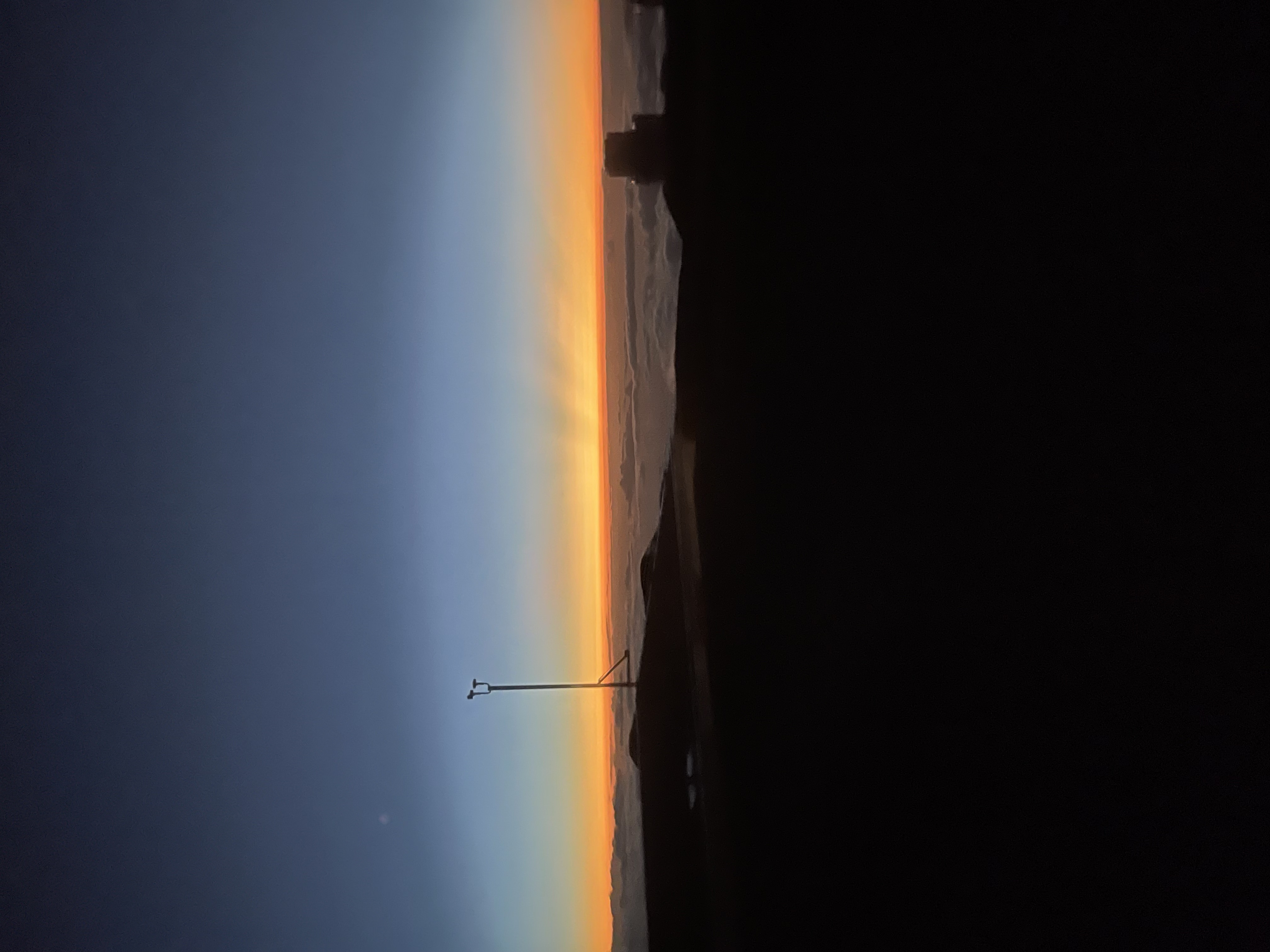
Mauna Kea Sunset vs. Stargazing: A Complete Tour Guide
Choosing between a Mauna Kea sunset and a stargazing adventure can be tough. We break down the differences to help you find the perfect high-altitude experience.
Choosing the right Mauna Kea experience feels like a monumental decision, and in many ways, it is. Do you ascend to the heavens for a world-class sunset above the clouds, or do you wait for darkness to reveal an impossibly starry sky? It’s the classic Mauna Kea dilemma, but the good news is that the choice isn't as stark as it seems. Most visitors can, and should, experience a bit of both.
This guide will walk you through the differences between sunset-focused and stargazing-focused adventures, helping you decide which journey to the sacred summit of Hawaiʻi Island is the right one for you.
What Makes Mauna Kea So Special?
Mauna Kea, a dormant volcano, is the highest point in the state of Hawaiʻi, reaching 13,803 feet (4,207 meters) above sea level, according to the USGS. Its high, dry, stable air and distance from city lights make it arguably the best place on Earth for ground-based astronomical observation. This is why it’s home to some of the world's most advanced observatories. But its significance is twofold; Mauna Kea is also deeply sacred in Native Hawaiian culture, considered a place where the heavens and earth meet.
When you visit, you are entering a revered space—both for science and for culture. All commercial tours are required to follow strict regulations set by the management authorities to protect the fragile environment and respect cultural practices. This is why we almost always recommend a guided tour over a self-drive attempt.
The Mauna Kea Sunset Experience
A Mauna Kea sunset tour is a bucket-list item for many visitors. The experience is dramatic, otherworldly, and profoundly beautiful.
What to Expect
- Afternoon Pickup: Tours typically start in the early afternoon with a pickup from Kona or Hilo-side locations.
- Acclimatization Stop: All reputable tours stop at the Onizuka Center for International Astronomy Visitor Information Station (VIS) at 9,200 feet for 30-60 minutes. This is a critical step to help your body adjust to the lower oxygen levels before ascending further.
- The Summit: You'll arrive at the summit before sunset. The tour provides heavy parkas and gloves because temperatures are often at or below freezing, even in summer. You'll watch as the sun dips below a sea of clouds, casting the mountain's own triangular shadow across the landscape.
- Descent and a Peek at the Stars: To minimize impact and for safety, vehicles are required to leave the summit shortly after sunset. Most tours will then descend back to the VIS or a nearby location for a brief stargazing session with a guide and telescope before heading back down the mountain.
Pros & Cons of a Sunset Tour
| Pros | Cons |
|---|---|
| See the incredible sunset from the summit | Less time dedicated to true stargazing |
| Experience the otherworldly summit landscape | Crowds can be significant at the sunset spot |
| Witness the mountain's shadow—a unique phenomenon | Extreme cold and high altitude |
| Most tours include a stargazing component anyway | You descend before the sky is at its darkest |
The Mauna Kea Stargazing Experience
A true stargazing-focused tour prioritizes time under the cosmos. While you might miss the summit sunset, you gain an in-depth astronomical journey.
What to Expect
- Evening Pickup: These tours often leave later, timing their arrival for after dark.
- Viewing Location: Crucially, most dedicated stargazing tours do not go to the summit. Instead, they set up at a prime viewing location near the VIS around the 9,200-foot level. This altitude is still exceptional for stargazing and avoids the harshest conditions of the summit.
- Guided Celestial Tour: Your guide, an expert in astronomy, will use a high-powered telescope (often a large Dobsonian) to show you planets, nebulae, galaxies, and star clusters. They will use a laser pointer to trace constellations and share stories and science about the night sky.
- More Time, More detail: You'll spend significantly more time (often 1.5-2 hours) looking through the telescope and learning about the sky compared to the brief session on a hybrid sunset tour.
Pros & Cons of a Stargazing Tour
| Pros | Cons |
|---|---|
| More time with telescopes and an astronomy guide | You miss the bucket-list sunset from the summit |
| In-depth look at deep-sky objects | May not feel as 'epic' as a summit journey |
| Less extreme cold and altitude | Still very cold, just not freezing |
| Ideal for those passionate about astronomy | The viewing location is accessible to the public |
The Hybrid Tour: The Best of Both Worlds?
Here’s the secret: most commercial tours are hybrid tours. They are marketed as “Sunset and Stargazing” tours for a reason. They take you to the summit for the main event—the sunset—and then follow it up with a quality stargazing component at a lower elevation. This is the most popular option and the one that provides the most complete Mauna Kea experience for the first-time visitor.
So, the question isn't really "sunset vs. stargazing," but rather which part of the experience you want to prioritize. If seeing the sunset from 13,803 feet is your primary goal, a standard sunset tour is your best bet. If you care more about spending two hours with a high-powered telescope and don't mind skipping the summit, a dedicated stargazing tour is for you. For 90% of visitors, the hybrid sunset tour is the perfect choice.
Key Factors to Help You Choose
- Your Main Priority: Are you here for that one iconic photo of the sunset above the clouds? Or are you a budding astronomer who wants to see Saturn's rings and the Andromeda Galaxy up close? Your primary motivation is the most important factor.
- Tolerance for Altitude and Cold: The summit is a serious, high-altitude environment. According to the National Park Service guidelines for high-altitude parks, visitors can experience altitude sickness. While tours are designed to mitigate this, those with respiratory or heart conditions, or who are pregnant, should consult a doctor and may be better suited for a stargazing-only tour at the VIS level. Find more advice on our website for planning your Hawaiʻi trip.
- Your Group: Are you traveling with young children? Most tours have strict age limits (often 13 or 16) for summit trips due to the risks of altitude sickness in children. Stargazing tours at the VIS level may have more lenient policies.
- Photography: Sunset offers dramatic, wide-angle landscape opportunities. Astrophotography is a specialized skill requiring a tripod, specific camera settings, and a lot of patience. While guides can offer tips, a sunset tour is generally more conducive to casual photography.
Our Recommendation
For the vast majority of visitors, especially first-timers, we recommend a hybrid sunset and stargazing tour. It offers the quintessential Mauna Kea experience: the breathtaking ascent, the unforgettable sunset from the summit, and a wonderful introduction to the cosmos with a telescope.
If you have a deep, specific interest in astronomy and have perhaps been to the summit before, then a dedicated stargazing tour is an excellent way to spend an evening diving deeper into the universe. Whichever you choose, a journey to the sacred slopes of Mauna Kea will be a highlight of your visit to the Big Island.