A Complete Guide to Mauna Kea Summit & Stargazing Tours
Witnessing sunset from the nearly 14,000-foot summit of Mauna Kea is a spiritual experience. Our guide explains why a tour is the safest and most enriching way to go, and what to expect from this bucket-list adventure.
Rising 13,803 feet (4,207 m) from the ocean floor, Mauna Kea is the tallest mountain in the world when measured from its base. It's a place of deep cultural significance to Native Hawaiians and home to the world's most advanced astronomical observatories. Reaching its summit to watch the sunset above the clouds is an unforgettable experience, but it’s not a simple drive. A guided tour is the safest, most respectful, and most informative way to ascend this sacred giant.
This guide walks you through everything you need to know about taking a Mauna Kea summit and stargazing tour, from what to expect on the journey to how to choose the right operator for this once-in-a-lifetime Big Island adventure.
Why a Guided Tour is Essential for Mauna Kea
While the adventurous spirit might tempt you to drive yourself, there are compelling safety, logistical, and ethical reasons why a guided tour is the best choice for nearly every visitor.
-
Safety First: Altitude Sickness: Ascending from sea level to nearly 14,000 feet in a few hours puts you at high risk for Acute Mountain Sickness (AMS). Symptoms can range from headaches and nausea to more severe, life-threatening conditions. Tour operators are trained to recognize the signs of AMS, carry oxygen, and structure their trips with a crucial acclimatization stop to mitigate the risks.
-
A Dangerous Drive: The road to the summit from the Visitor Information Station is steep, unpaved, and recommended only for true 4-wheel-drive vehicles with low-range gearing. The State of Hawaiʻi, which manages the access road, explicitly states this requirement. Standard rental SUVs are not equipped for this, and brake failure on the descent is a real and dangerous possibility. Most rental car agreements forbid this drive, meaning you would be uninsured in case of an accident or breakdown.
-
Cultural & Environmental Respect: Mauna Kea is a wahi pana (a sacred place) in Hawaiian culture. It is the realm of deities and the burial ground of high-ranking aliʻi (chiefs). A knowledgeable guide provides invaluable context about the mountain's cultural importance, teaching you about the proper etiquette and ensuring visitors behave with reverence and respect. This is not just another tourist attraction; it's a spiritual center.
-
Logistics & Comfort: Guided tours make the entire experience seamless. They provide the proper 4x4 vehicle, handle any necessary permits, and supply essentials you likely didn't pack for Hawaiʻi—namely heavy arctic-style parkas and gloves. Most tours also include a warm meal and hot beverages like cocoa or tea during the stargazing portion, which are incredibly welcome in the frigid night air.
What to Expect on a Summit & Stargazing Tour
While itineraries vary slightly between companies, most Mauna Kea tours follow a similar, well-planned structure designed for safety and maximum enjoyment.
Afternoon Pickup & Acclimatization
Your journey will begin mid-afternoon with a pickup from a designated location, often in the Kailua-Kona or Waikoloa resort areas. From there, you'll begin the ascent. The most important part of the drive up is the acclimatization stop, which takes place at the Mauna Kea Visitor Information Station (VIS), located at 9,200 feet (2,800 m). You will spend about 30-60 minutes here, allowing your body to begin adjusting to the thinner air. Many tours serve dinner during this stop.
The Final Ascent to the Summit
After the stop, you’ll board a 4x4 vehicle for the final, rugged 8-mile drive to the top. The landscape transforms dramatically, shifting from scrubland to a Mars-like environment of red volcanic cinder cones. The ride is bumpy and slow, a testament to the extreme terrain.
Sunset Above the Clouds
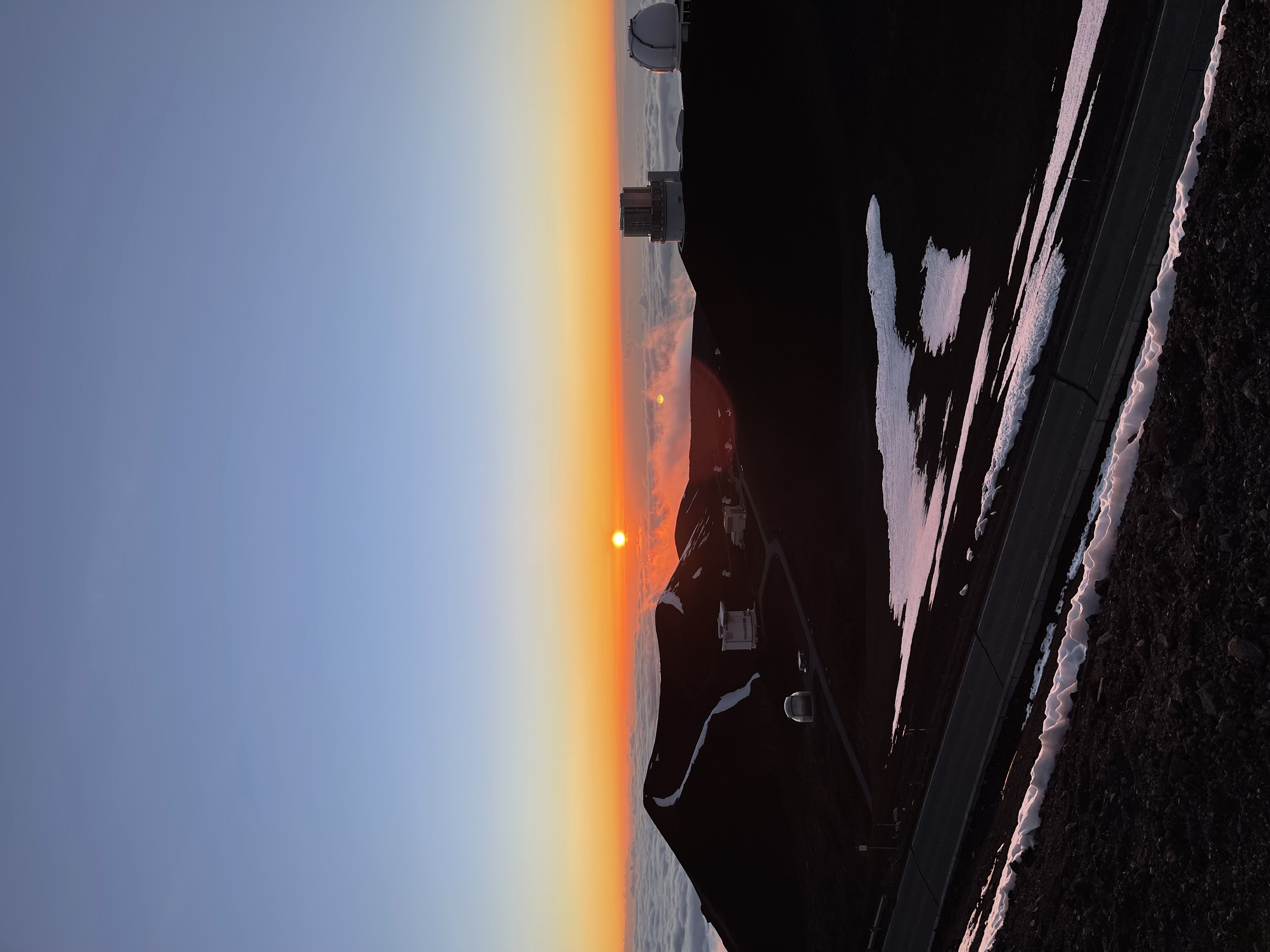
Arriving at the 13,803-foot summit before sunset is a breathtaking moment. You are literally above the clouds, looking out over a sea of white fluff as the sun melts into the horizon. The air is thin, cold, and silent. You'll see the iconic white-and-silver domes of the international observatories dotting the summit ridge. Due to the extreme altitude, time at the summit is typically limited to 30-45 minutes to minimize health risks.
Descent for Stargazing
After sunset, you will descend back down to the 9,000-foot level, near the VIS. Stargazing is not conducted at the summit for two main reasons: it is dangerously cold and exposes guests to the high altitude for too long, and it prevents light pollution (even from flashlights) that could interfere with the sensitive telescopes.
At this lower, safer elevation, your guide will set up a professional-grade telescope, often a large Dobsonian or Schmidt-Cassegrain model. They will use a laser pointer to trace constellations and share their knowledge of astronomy and Hawaiian celestial navigation. Seeing the Milky Way arc across a sky with no light pollution, or viewing Saturn's rings and distant galaxies through a telescope, is a profoundly moving experience.
Choosing the Right Mauna Kea Tour Company
Several reputable companies offer Mauna Kea tours. When choosing, consider the following factors:
- Safety Record & Experience: Prioritize established companies with a long history of safe operations on the mountain.
- Guide Quality: The best tours are led by guides who are not only skilled drivers but are also passionate and knowledgeable about astronomy, geology, and most importantly, Hawaiian culture. A great guide transforms the trip from a sightseeing excursion into a rich educational experience.
- Group Size: Smaller group sizes typically allow for a more personal experience and more time at the telescope. For an exclusive experience, a luxury travel specialist like High End Hawaiʻi can help arrange private tours that cater specifically to your group.
- Inclusions: Check what's included in the price. All reputable tours should provide heavy parkas and gloves. Confirm whether a full dinner or just snacks are provided, as well as hot drinks for the stargazing portion.
The Summit: A Realm of Science and Spirit
A trip to Mauna Kea is a visit to a place where ancient tradition and modern science coexist.
The Scientific Importance
Mauna Kea's summit is above 40% of Earth's atmosphere and 90% of its water vapor. This, combined with its stable airflow and distance from city lights, makes it arguably the best site for ground-based astronomy on the planet. The summit hosts more than a dozen of the world's most powerful telescopes, operated by consortia from around the globe, including the twin W. M. Keck Observatory telescopes and Japan's Subaru Telescope.
The Cultural Significance
For Kanaka Maoli (Native Hawaiians), the mountain is a sacred ancestor. Its summit is considered the piko (spiritual center) of the island and a place where the heavens connect with the earth. It is the home of the snow goddess Poliʻahu. Because of its sanctity, it's crucial for visitors to be respectful. Stay on marked paths, speak softly, leave no trace, and do not touch or remove any rocks or cultural offerings you may see.
Practical Advice for Your Tour
Proper preparation is key to a comfortable and enjoyable tour.
What to Wear
- Layers: Wear multiple layers. A t-shirt, a long-sleeved shirt, and a fleece or sweater is a good system. You can remove layers during the warmer parts of the day and add them as you ascend.
- Pants: Long pants are required. Jeans or hiking pants are ideal.
- Footwear: Sturdy, closed-toe shoes are mandatory. Sneakers or hiking boots are perfect. No sandals or flip-flops.
- Accessories: Even though tours provide parkas, bring your own warm hat and gloves. You’ll be glad you have them.
What to Bring
- Water: Drink plenty of water throughout the day to stay hydrated, which helps combat altitude sickness.
- Sun Protection: The sun is incredibly intense at high altitudes. Bring sunglasses and apply sunscreen before you go.
- Lip Balm: The air is extremely dry, and your lips will thank you.
- Camera: Bring your camera, but be prepared for a "no flash" rule during the stargazing portion to preserve everyone's night vision.
Related Reading:
- Your Guide to the Best Stargazing on the Big Island: /blog/big-island-stargazing-guide
- The Ultimate Big Island Packing List: /blog/what-to-pack-for-hawaii