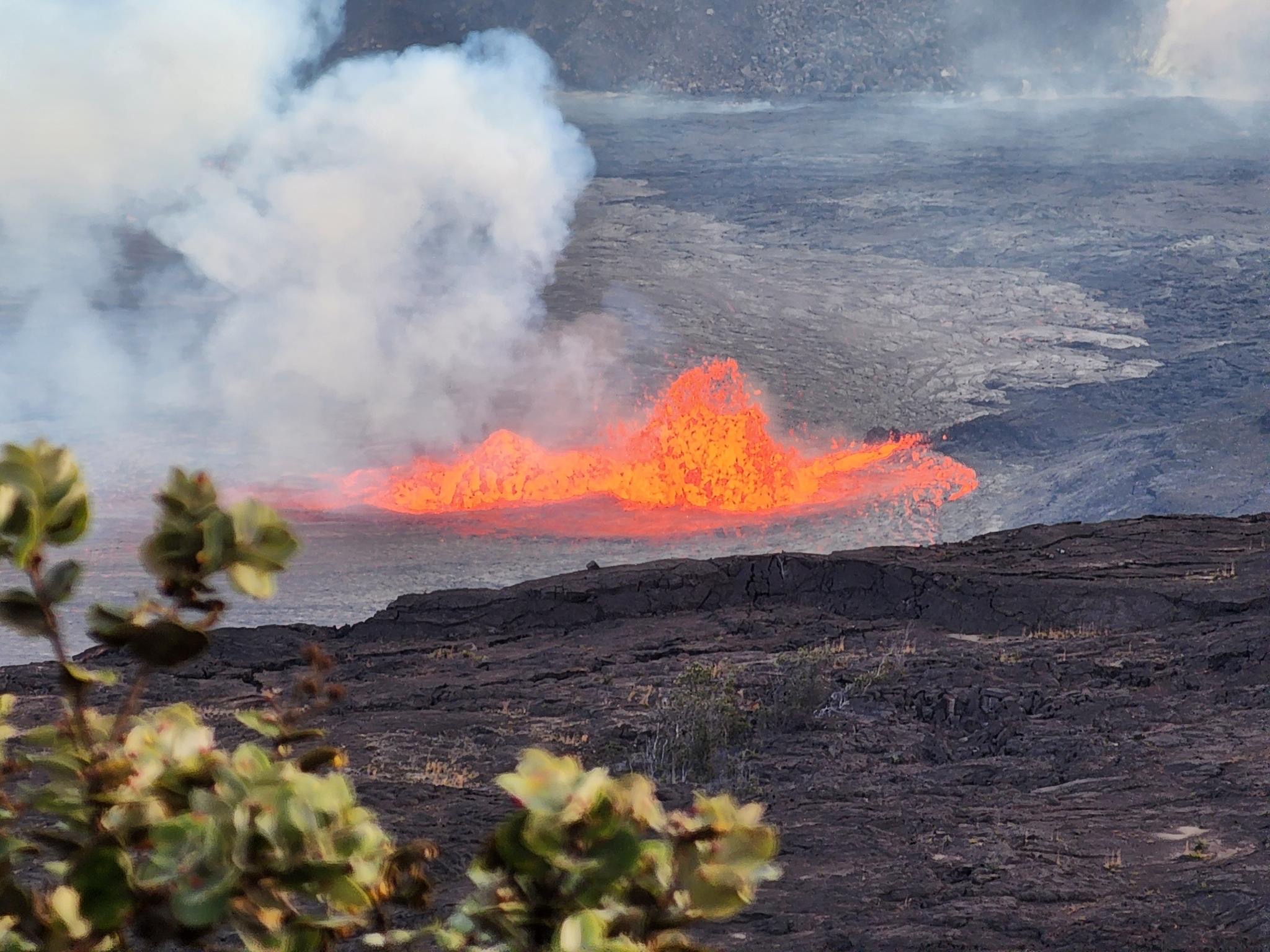
Kīlauea Overlook Night Viewing: A Complete Guide to Seeing the Glow
Seeing Kīlauea's caldera at night is an unforgettable experience. When an eruption is active within Halemaʻumaʻu crater, the Kīlauea Overlook offers a front-row seat to the vibrant, living glow of Pele.
Seeing Kīlauea's caldera at night is an unforgettable experience, a primal display of creation that connects you to the very pulse of the island. While the massive Kaluapele (Kīlauea caldera) is impressive by day, it reveals its true, dynamic power after dark. When an eruption is active within Halemaʻumaʻu crater, viewpoints like the Kīlauea Overlook transform into front-row seats for one of Earth's greatest shows: the vibrant, living glow of Pele, the Hawaiian deity of volcanoes and fire.
This guide provides everything you need to know for a successful Kīlauea night viewing mission. We'll cover how to check for volcanic activity, where to go, what to bring, and how to experience this natural wonder safely and respectfully.
Is the Volcano Erupting Right Now?
This is the most important question, and the answer changes. The mesmerizing red glow is only visible when there is an active eruption within Halemaʻumaʻu crater. Kīlauea is one of the world's most active volcanoes, but its activity is episodic. It can erupt for months and then pause for weeks or months.
Before you even get in the car, you must check the current status. The definitive source is the USGS Hawaiian Volcano Observatory (HVO).
- Check the HVO Website: The HVO Kīlauea update page is updated daily (or more frequently during significant changes). Look for phrases like "eruption of lava continues" or "glow is visible."
- View the Webcam: The HVO also maintains webcams. The KWcam (Kīlauea West) often provides a fantastic live view of the crater and any active lava lake. This will give you a real-time look at what to expect.
If the USGS reports that the eruption has paused or ended, you will not see a glow. The landscape is still magnificent, but the main attraction for night viewing will be absent.
A Practical Guide to Night Viewing at Kīlauea Overlook
Once you've confirmed there's activity to see, it's time to plan your visit. The Kīlauea Overlook is one of the most accessible and popular spots for watching the eruption.
Getting There
The Kīlauea Overlook is located within Hawaiʻi Volcanoes National Park. From the park's entrance station on Highway 11, drive straight for about 2.5 miles on Crater Rim Drive. The parking area for the overlook will be on your left, just past the Volcano House hotel.
Be prepared to pay the park entrance fee, which is charged per vehicle and is valid for seven days. You can check the current fee on the official National Park Service (NPS) website. This pass allows you to explore the rest of the park's attractions during your stay.
Best Times for Viewing
While the glow can be faintly visible during twilight, the real show begins once the sky is completely dark. The best viewing conditions are typically:
- One hour after sunset until one hour before sunrise.
- On nights with a new moon or a late-rising moon. A bright moon can wash out the glow, so darker skies are always better.
Crowds peak from just after sunset until around 9:00 PM. If you're patient, arriving later in the evening (after 9:30 PM) often means fewer people and a more peaceful experience. Parking can be extremely limited during peak hours, so be prepared to circle the lot or use overflow parking.
What to Bring
The summit of Kīlauea sits at 4,000 feet (1,219 meters) in elevation. It gets cold, windy, and often rainy, especially after dark. Do not show up in shorts and a t-shirt.
- Warm Layers: A fleece jacket, a windbreaker, and long pants are essential. A warm hat and gloves are also a great idea.
- Rain Gear: Weather can change in an instant. A waterproof jacket is a must.
- Sturdy Shoes: You'll be standing on pavement or uneven ground in the dark. Closed-toe shoes are required.
- Flashlight or Headlamp: A light source is critical for navigating safely from the parking lot to the viewing area. A headlamp with a red-light setting is ideal, as red light preserves your night vision and is less disruptive to others.
- Water and Snacks: Services are limited, especially late at night. Bring your own hydration and food.
- Binoculars: While you can see the glow with the naked eye, binoculars will bring the bubbling and spattering of the lava lake into much sharper focus.
- Camera and Tripod: If you want to take good photos, a tripod is non-negotiable (more on this below).
Other Viewing Areas in the Park
Kīlauea Overlook is excellent, but it's not your only option. Depending on crowds and conditions, you might find a better experience at one of these other locations along Crater Rim Drive.
Uēkahuna
This viewpoint, located at the site of the former Jaggar Museum, often offers the most direct and expansive view of Halemaʻumaʻu crater. It is also, for this reason, the most popular and crowded spot. The parking lot here is large but fills up very quickly. Be prepared for a short walk from your car in a bustling environment.
Keanakākoʻi Overlook
To reach this spot, you'll need to park at the Devastation Trail parking lot and walk about one mile down a paved access road (closed to vehicles). This extra effort means it's almost always less crowded than Uēkahuna or Kīlauea Overlook. The view can be just as spectacular, offering a slightly different angle on the caldera floor.
Various Pullouts
As you drive Crater Rim Drive, you'll notice several smaller, unmarked pullouts. Sometimes these can offer a stunning, private view away from the main crowds. Use caution when pulling over and walking in the dark.
| Viewpoint | Pros | Cons | Walking Required |
|---|---|---|---|
| Kīlauea Overlook | Very accessible, near Volcano House | Can be crowded, side angle | Minimal |
| Uēkahuna | Most direct, expansive view | Extremely crowded, parking difficult | Short walk |
| Keanakākoʻi | Fewer people, peaceful | 1-mile walk each way, no facilities | ~2 miles roundtrip |
Photography Tips for Capturing the Glow
Photographing the glow is challenging but rewarding. Your phone's camera might struggle, but a dedicated camera can produce incredible results.
- Use a Tripod: This is the most important piece of gear. You'll be using long shutter speeds, and any camera shake will result in a blurry photo.
- Use Manual Mode: Set your ISO low (100-800) to reduce noise, open your aperture wide (e.g., f/2.8-f/4) to let in light, and adjust your shutter speed. Exposures of 5 to 20 seconds are a good starting point.
- Focus Manually: Your camera's autofocus will hunt in the dark. Switch to manual focus, use your camera's live view to zoom in on the brightest part of the glow, and adjust the focus ring until it's perfectly sharp.
- Bring Extra Batteries: Cold temperatures drain batteries quickly. Keep a spare in a warm pocket.
Safety, Respect, and Mālama ʻĀina
Visiting Kīlauea is a privilege. The area is a sacred landscape for Native Hawaiians and a delicate natural environment. Please visit with respect.
- Heed All Closures: The NPS closes areas for safety and resource protection. Never cross barriers or enter closed areas. Fumes and ground instability are real dangers. Check the park's website for the latest alerts.
- Be Mindful of Air Quality: Volcanic eruptions produce vog (volcanic smog), which contains sulfur dioxide and other gases. These can be hazardous, especially for people with respiratory issues, young children, and the elderly. Check the Hawaiʻi Interagency Vog Information Dashboard for current conditions.
- Stay on Trails: Protect the fragile ecosystem by staying on marked paths and viewing areas.
- Keep Quiet: Many people come to witness the volcano in quiet reverence. Avoid loud talking, music, or shouting.
- Pack It In, Pack It Out: Leave no trace. Take all of your trash with you when you leave.
Viewing Kīlauea's glow is a core Big Island experience. For more ideas on how to round out your visit, check out our complete guide to Hawaiʻi Volcanoes National Park.
Related Posts
- A Guide to Stargazing on Mauna Kea: /blog/stargazing-mauna-kea
- What to Pack for Your Trip to the Big Island: /blog/what-to-pack-for-hawaii
- Understanding Kīlauea: A Guide to an Active Volcano: /blog/kilauea-volcano-guide