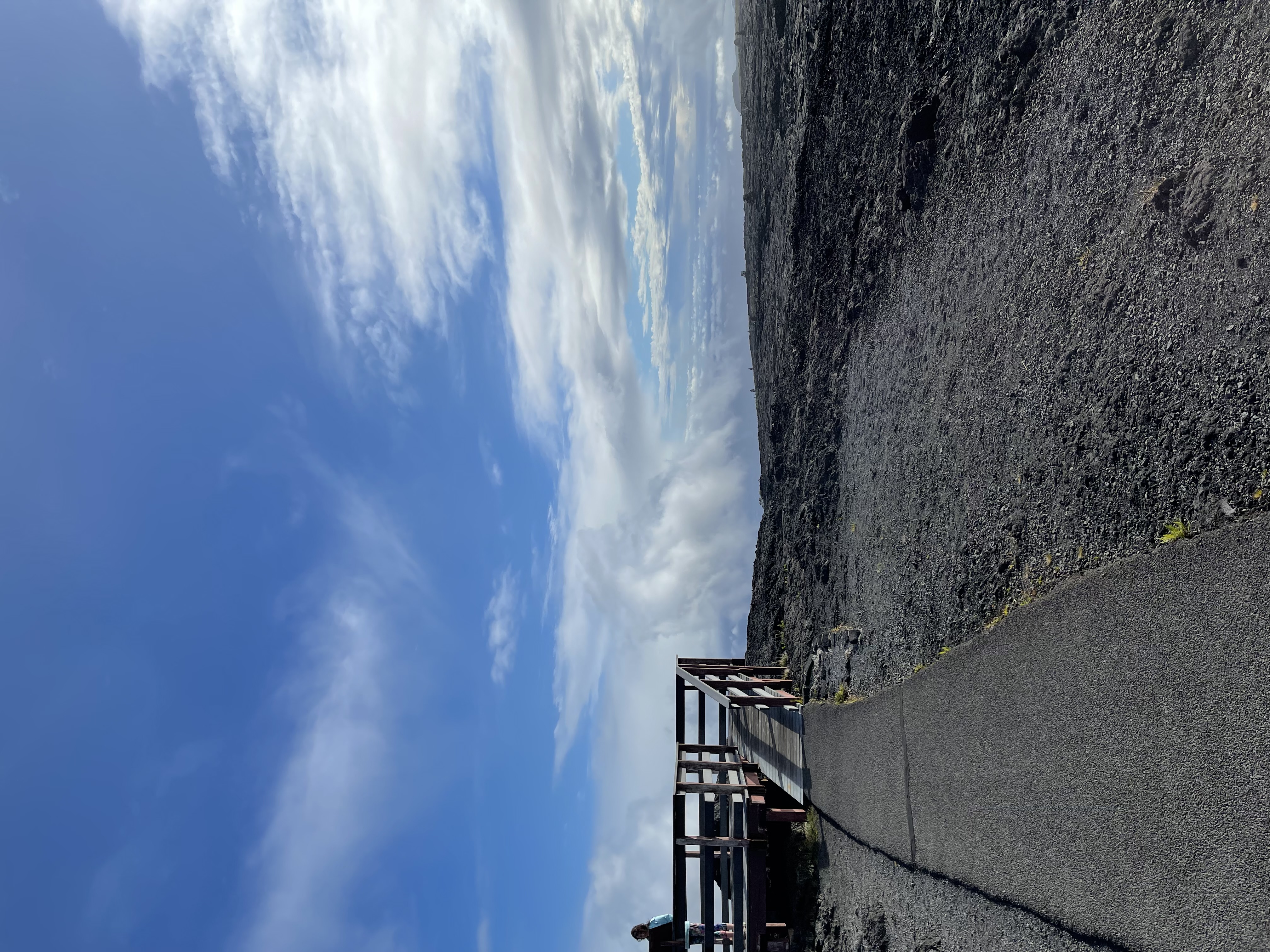
Kīlauea Iki vs Nāpau Trail: Which Volcano Hike is for You?
Choosing your volcanic adventure? We break down two classic hikes in Hawaiʻi Volcanoes National Park: the iconic Kīlauea Iki loop and the rugged, remote Nāpau Trail.
Both the Kīlauea Iki and Nāpau trails offer profound encounters with the power of Pele, the Hawaiian goddess of volcanoes. Yet they deliver vastly different experiences. One is a world-famous loop that lets you walk across the floor of a recently-erupted crater, while the other is a long, demanding trek into the remote volcanic wilderness. Choosing the right one depends entirely on your fitness, time, and what you hope to find on the trail.
Here at Big Island Tours, we've logged countless miles on both paths. Let’s break down the details to help you decide which of these incredible hikes in Hawaiʻi Volcanoes National Park belongs on your itinerary.
An Overview of the Contenders
Think of this as a choice between a celebrated icon and a backcountry challenger.
The Kīlauea Iki Trail is arguably the park's signature day hike. It’s a moderate 4-mile loop that descends through a lush rainforest onto the solidified, still-steaming floor of a lava lake created by a spectacular 1959 eruption. It's accessible, profoundly scenic, and offers a unique perspective you won't find anywhere else.
The Nāpau Trail is a different beast altogether. This is a strenuous, 12-mile out-and-back trail for serious, well-prepared hikers. It traverses stark, beautiful lava fields and older craters, leading to a dramatic overlook of the Nāpau Crater and the distant, often-fuming Puʻu ʻŌʻō vent. It promises solitude and a raw, untamed vision of Kīlauea's East Rift Zone.
The Kīlauea Iki Trail: A Journey Across a Lava Lake
The Kīlauea Iki (literally "little Kīlauea") Trail is a journey back in time. In 1959, this crater became a churning lake of molten rock, with fountains of lava shooting up to 1,900 feet in the air. Today, you can walk across the very surface of that cooled lake.
The Experience
The typical route begins at the Kīlauea Iki Overlook on Crater Rim Drive. We recommend hiking the loop clockwise. You'll start by descending about 400 feet through a beautiful native ʻōhiʻa and hāpuʻu fern forest. The air is cool, damp, and filled with birdsong. Suddenly, you emerge from the trees onto the crater floor.
The landscape is vast, cracked, and starkly beautiful. You'll follow rock cairns (called ahu) across the dark, undulating pāhoehoe lava. Look closely at the patterns and textures. You'll notice steam rising from deep cracks in the crater floor—rainwater seeping down and hitting the still-hot rock far below. The trail then ascends the far crater wall via a series of switchbacks, returning you to the overlook through more rainforest.
- Distance: Approximately 3.3 miles (5.3 km) for the crater floor loop, or 4 miles (6.4 km) if starting and ending at the Kīlauea Visitor Center.
- Time Commitment: 2 to 3 hours.
- Difficulty: Moderate, due to the 400-foot descent and ascent. The crater floor itself is relatively flat but uneven.
The Nāpau Trail: A Trek to the Volcanic Frontier
If Kīlauea Iki is a curated experience, the Nāpau Trail is a wild one. This trail is for those who crave solitude and a deeper, more challenging immersion into the volcanic landscape. It’s a long day on the trail, so an early start is essential.
The Experience
The journey begins at the Mauna Ulu parking area off Chain of Craters Road. The first part of the trail is a popular, shorter hike to the Puʻu Huluhulu cinder cone, which offers great views. Past this point, the crowds disappear. You are now in the heart of Kīlauea's East RiftZone, a landscape shaped by eruptions from Mauna Ulu (1969-1974) and Puʻu ʻŌʻō (1983-2018).
The trail crosses vast, exposed lava fields of both ropey pāhoehoe and jagged ʻaʻā. The path is marked by ahu and can be difficult to follow at times. You'll feel a profound sense of isolation out here, with nothing but the wind and the crunch of lava rock under your feet. The turnaround point is the Nāpau Crater Overlook, which provides a stunning (and safe) vantage point of the massive crater and, on a clear day, the distant Puʻu ʻŌʻō cone. According to the National Park Service (NPS), this trail can be closed at any time due to volcanic hazards, so checking the park's website for current conditions is mandatory before you go.
- Distance: 12 miles (19.3 km) round trip.
- Time Commitment: 6 to 8 hours.
- Difficulty: Strenuous and challenging. The terrain is rough, uneven, and completely exposed to sun and wind. This is not a casual hike.
Head-to-Head Comparison
Let’s put the two trails side-by-side to make your choice clearer.
| Feature | Kīlauea Iki Trail | Nāpau Trail |
|---|---|---|
| Difficulty | Moderate | Strenuous / Challenging |
| Distance | ~4 miles (6.4 km) loop | 12 miles (19.3 km) out-and-back |
| Time Commitment | 2–3 hours | 6–8 hours |
| Scenery | Lush rainforest, vast cracked crater floor, steam vents. | Stark lava fields, older craters, wild and remote rift zone vistas. |
| Crowds | Popular and often busy. | Sparse to none, especially past Puʻu Huluhulu. |
| Accessibility | Easily accessed trailhead, great for most visitors. | For experienced, fit hikers with a full day to commit. |
| "Wow" Factor | The otherworldly experience of walking on a lava lake. | The immense scale and solitude of the volcanic backcountry. |
Who Should Hike Kīlauea Iki?
This trail is the clear winner for the vast majority of visitors to Hawaiʻi Volcanoes National Park. You should choose Kīlauea Iki if:
- You are a first-time visitor to the park.
- You are traveling with family or a group of mixed fitness levels.
- You have a half-day or less to dedicate to a single hike.
- You want a high-reward hike with an unforgettable, iconic experience without extreme physical exertion.
- The idea of descending into a crater and walking where lava once flowed is your top priority.
Who Should Hike The Nāpau Trail?
The Nāpau Trail is a special kind of adventure reserved for a smaller group of hikers. You should consider the Nāpau Trail if:
- You are an experienced and physically fit hiker looking for a full-day challenge.
- You have visited the park before and are looking for a deeper, more remote experience.
- Solitude is a key part of what you seek in a hike.
- You are fascinated by volcanic geology and want to see the long-term impacts of rift zone eruptions up close.
- You are fully prepared with ample water (at least 4 liters per person), sun protection, navigation skills, and appropriate gear.
Safety and Preparation
Volcanic landscapes are dynamic and demand respect. Regardless of which trail you choose, follow these essential guidelines:
- Check Conditions: Always check the Hawaiʻi Volcanoes National Park website for the latest trail closures, weather, and air quality advisories before you head out.
- Wear Sturdy Shoes: Closed-toe hiking shoes or boots are essential. The lava rock is sharp and unforgiving.
- Bring Water: For Kīlauea Iki, bring at least 1-2 liters per person. For Nāpau, a minimum of 4 liters is non-negotiable.
- Protect Yourself from the Sun: The sun is intense, especially on the exposed lava fields of the Nāpau Trail. Wear a hat, sunglasses, and reef-safe sunscreen.
- Prepare for Rain: Weather can change in an instant. A lightweight rain jacket is always a good idea.
- Stay on the Trail: Follow the marked trail and rock cairns (ahu). Wandering off-trail can lead to getting lost and damages fragile ecosystems and cultural sites.
Ultimately, there is no wrong choice, only the right choice for you. Both Kīlauea Iki and Nāpau offer a chance to connect with the living, breathing geology of Hawaiʻi Island in a way you will never forget.
Related Reading
- Explore More Hikes: The Best Hikes in Hawaiʻi Volcanoes National Park
- Plan Your Park Visit: An Insider's Guide to Hawaiʻi Volcanoes National Park
- Understanding the Volcano: A Visitor's Guide to the Kīlauea Volcano