Is Kīlauea Erupting? A Guide to Current Volcano Activity
Kīlauea is one of the world's most active volcanoes, and its eruption status can change daily. Here’s how to find the most current information and plan a safe, awe-inspiring visit.
Is Kīlauea erupting? It's the question on every Big Island visitor's mind. As one of the most active and accessible volcanoes on Earth, Kīlauea's status is a dynamic story written in fire and rock. This guide will help you understand how to find the latest updates, where to go for safe viewing, and what to expect when you visit Hawaiʻi Volcanoes National Park.
Kīlauea is in a near-constant state of change. An eruption that was visible yesterday might pause today, and a quiet crater can roar to life with little warning. Because of this, the most important part of your planning is knowing where to get reliable, up-to-the-minute information.
How to Check the Current Eruption Status
Forget social media rumors and outdated travel blogs. For accurate information on Kīlauea's activity, you must go directly to the primary sources. These are the agencies responsible for monitoring the volcano and managing public safety.
- USGS Hawaiian Volcano Observatory (HVO): This is the definitive scientific source. The HVO website provides daily updates, live webcams, seismic data, and maps. It's the first place to check for any changes in volcanic activity. Look for the "Kīlauea Updates" section on their homepage.
- Hawaiʻi Volcanoes National Park (NPS): The park's official website is your guide to what's open and what's closed. The "Alerts & Conditions" page will tell you about trail closures, road closures, and current viewing opportunities within the park. This is the best source for practical, on-the-ground visitor information.
Understanding the USGS Volcano Alert Levels
The USGS uses a standardized system to communicate the status of a volcano. Understanding these levels will help you interpret their reports.
| Alert Level | Aviation Color Code | Meaning |
|---|---|---|
| NORMAL | GREEN | The volcano is in a non-eruptive state. Background activity is normal. |
| ADVISORY | YELLOW | The volcano is exhibiting signs of elevated unrest above known background levels. An eruption is possible. |
| WATCH | ORANGE | The volcano is exhibiting heightened or escalating unrest with increased potential of eruption. An eruption is underway with limited hazards or the timeline to eruption is uncertain. |
| WARNING | RED | A hazardous eruption is imminent, underway, or suspected. Significant emission of volcanic ash and other dangers are likely. |
Most of the time, even when Kīlauea is erupting within the summit caldera, the alert level may be at WATCH/ORANGE because the hazards are contained within a specific, non-populated area (Halemaʻumaʻu crater). A WARNING/RED level is reserved for more significant events that could pose a wider threat.
Understanding Kīlauea's Activity
For most of the past few decades, Kīlauea's activity was focused on its East Rift Zone, culminating in the dramatic 2018 eruption that created a new coastline in the Puna district. Since then, eruptive activity has been confined almost exclusively to the summit caldera, within the deep crater of Halemaʻumaʻu.
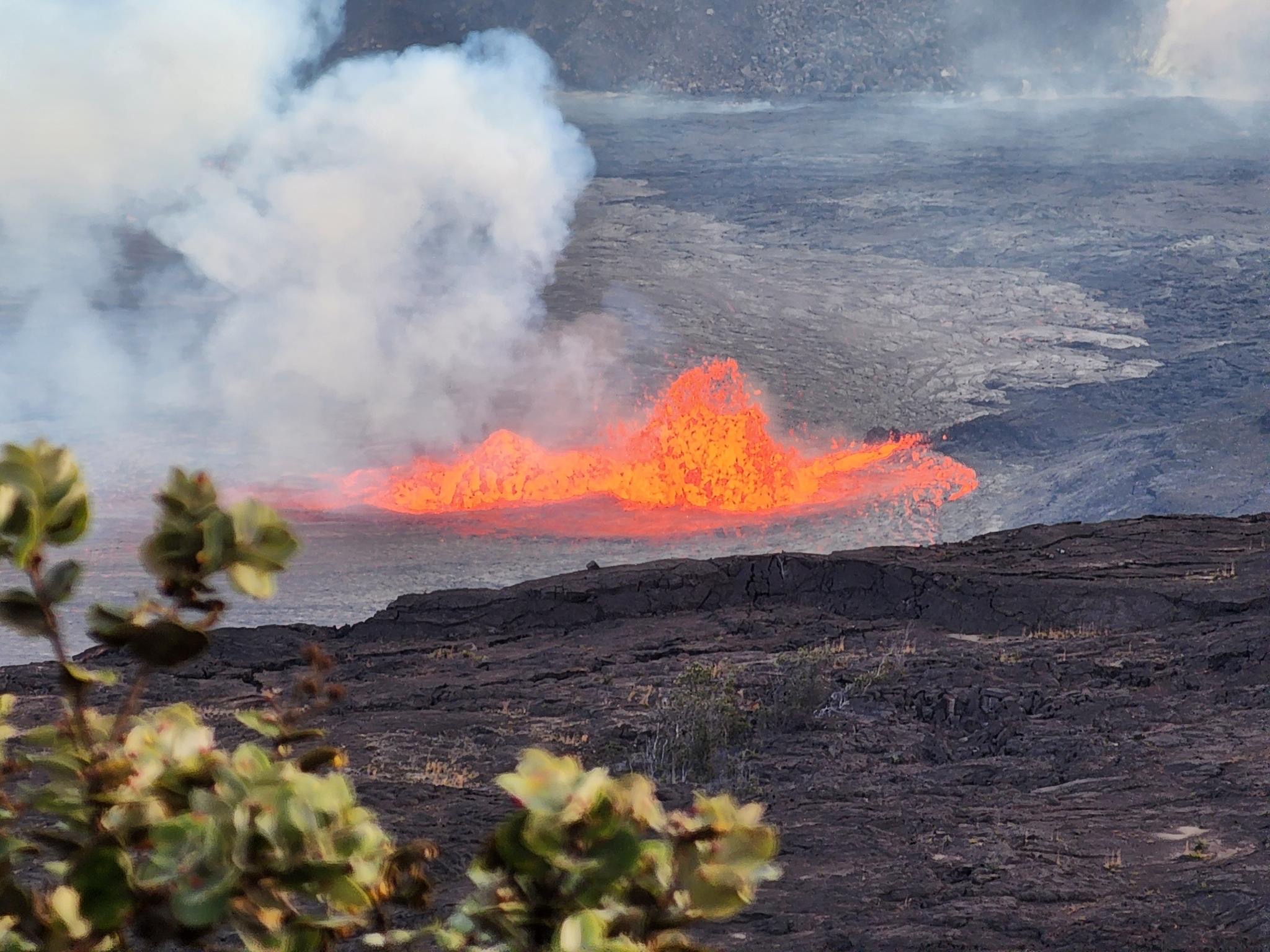
This is good news for visitors. Summit eruptions are generally easier and safer to view, as they are contained within a well-monitored area of Hawaiʻi Volcanoes National Park. The lava fountains and lava lake are typically visible from multiple established overlooks along the crater rim.
When you see reports of an "eruption," it's important to know where it is. An eruption contained within Halemaʻumaʻu is a spectacular and safe tourist attraction. An eruption along a rift zone in a residential area, while geologically fascinating, is a natural disaster and not a visitor event.
Where to View an Eruption (When It's Happening)
Assuming an eruption is happening at the summit, Hawaiʻi Volcanoes National Park is the only place to see it. The National Park Service will establish designated viewing areas to ensure visitor safety. The best locations change depending on the specific vent and lava flow, so always check with park rangers or the NPS website upon arrival.
Commonly used viewing areas along the caldera rim include:
- Uēkahuna: As the highest point on the caldera rim, this overlook offers a panoramic and often spectacular view into Halemaʻumaʻu.
- Kīlauea Overlook: Located near the Volcano House, this is one of the most accessible viewpoints, offering a wide perspective of the caldera.
- Keanakākoʻi Overlook: Requires a short walk, but can sometimes offer a more direct line of sight to active lava, depending on its location within the crater.
- Other viewpoints: The park may open other areas along Crater Rim Trail as conditions allow.
Viewing is best at night when the incandescent glow of the lava is most dramatic. However, this is also the most crowded time. Arriving before sunset allows you to see the vast landscape in daylight and then witness the glow emerge as darkness falls.
Planning Your Visit to Hawaiʻi Volcanoes National Park
Whether lava is flowing or not, a visit to the park is a must-do. Here are some practical tips:
- Be prepared for crowds: When an eruption is visible, expect significant traffic and limited parking, especially from sunset to 10 p.m. Arriving very early in the morning (before sunrise) or late at night can be a good strategy.
- Dress in layers: The summit of Kīlauea is nearly 4,000 feet (1,219 m) in elevation. Temperatures can be cool and damp, especially at night. Rain is common year-round. Bring a rain jacket, long pants, and closed-toe shoes.
- Bring supplies: Pack water, snacks, and a full tank of gas. There are limited services inside the park. A flashlight or headlamp (preferably with a red-light setting to preserve night vision) is essential for walking at night.
- Pay the entrance fee: The park entrance fee is valid for seven days, allowing you to return multiple times. You might visit during the day for a hike and come back at night to see the glow. For a comprehensive look at how to structure your trip, check out our resources on planning your visit to the Big Island.
Safety First: Visiting an Active Volcano
Your safety is your responsibility. The volcanoes are powerful and the environment is unforgiving. Heed all warnings from the NPS and USGS.
- Respect all closures: Do not enter closed areas. They are closed for a reason, often due to invisible dangers like unstable ground or high concentrations of volcanic gas.
- Stay on marked trails: The landscape off-trail can be treacherous, with hidden cracks and sharp, unstable lava rock.
- Heed air quality warnings: Eruptions produce sulfur dioxide (SO₂) and other volcanic gases, collectively known as vog. These gases can be hazardous, especially for people with respiratory conditions, pregnant women, and young children. Check the Hawaiʻi Interagency Vog Information Dashboard for current conditions. If you feel ill, leave the area immediately.
- Drive carefully: Be alert for pedestrians and wildlife on park roads, especially at night.
What If Kīlauea Isn't Erupting?
Don't be disappointed if there's no active lava during your visit. Hawaiʻi Volcanoes National Park is a stunning and sacred landscape with plenty to explore.
- Drive Chain of Craters Road: This dramatic road descends 3,700 feet from the summit to the coast, passing by numerous old craters and lava flows. The road ends at the Hōlei Sea Arch.
- Hike Kīlauea Iki Trail: This iconic 4-mile loop descends through lush rainforest onto the floor of a solidified lava lake from a 1959 eruption.
- Walk through Nāhuku (Thurston Lava Tube): A classic park experience, this walk takes you through a 500-year-old lava tube surrounded by a beautiful tree fern forest.
- Explore the Steam Vents and Steaming Bluff: Witness groundwater seeping down to hot volcanic rocks and rising back up as steam. It’s a powerful reminder of the heat just below your feet.
A Note on Mauna Loa
Kīlauea's neighbor, Mauna Loa, is the largest active volcano on Earth. After a 38-year slumber, it erupted briefly in late 2022. While it is currently quiet, it is also closely monitored by the HVO. An eruption of Mauna Loa is a different beast entirely—its lava flows are much larger and can travel much faster than Kīlauea's. For now, its summit and upper slopes remain closed to hiking following the recent eruption, but its presence is a humbling reminder of the immense volcanic power that defines the island of Hawaiʻi.