Rainbow Falls Hilo: A Guide to Visiting This Big Island Gem
Known for the stunning rainbows that form in its morning mist, Rainbow Falls (Waiānuenue) is one of Hilo's most accessible and beautiful waterfalls. Here's how to plan your visit.
Rainbow Falls, or Waiānuenue, is one of the most iconic and easily accessible waterfalls on the Big Island of Hawaiʻi. Located right in Hilo town, this 80-foot cascade on the Wailuku River is famous for the vibrant rainbows that appear in its mist on sunny mornings. It’s a place of natural beauty, cultural significance, and a must-see stop on any Hilo itinerary.
Unlike many of the island's other dramatic waterfalls that require a hike, Rainbow Falls can be appreciated from a lookout point just steps from the parking lot. This makes it a perfect, quick stop for visitors of all ages and mobility levels. But there's more to this spot than just a pretty picture; it's a window into the geology and mythology of Hawaiʻi.
What Makes Rainbow Falls Special?
The magic of Rainbow Falls lies in a perfect combination of natural phenomena and cultural history. Its Hawaiian name, Waiānuenue, literally translates to "rainbow water," a name it earns nearly every sunny morning.
- The Rainbow: The falls face east, so as the morning sun rises, its light hits the fine mist thrown up by the plunging water. This creates a brilliant, perfectly-formed rainbow, often appearing to dance right at the base of the falls. Arriving at the right time transforms a beautiful scene into a truly enchanting one.
- The Lava Cave: Behind the waterfall's curtain is a large lava cave, which, according to Hawaiian mythology, is the home of Hina, the goddess of the moon. This geological feature adds a layer of mystery and intrigue to the view.
- Accessibility: Its location within Hilo's Wailuku River State Park means you don't need to plan a long excursion. You can easily visit for 20 minutes or an hour as part of a larger day exploring the Hilo coast or on your way to Hawaiʻi Volcanoes National Park.
When is the Best Time to Visit?
Timing is everything at Rainbow Falls, especially if you want to see its namesake phenomenon.
Best Time of Day
For the best chance of seeing a rainbow, visit on a clear, sunny morning between 9:00 AM and 11:00 AM. The sun needs to be at the right angle to refract light through the mist. If you arrive too early, the sun will be too low; too late, and it will be too high overhead. A little bit of cloud is fine, but on a heavily overcast Hilo day, you'll see a beautiful waterfall but likely no rainbow.
Best Season and Conditions
Hilo is one of the wettest cities in the United States, which means Rainbow Falls is impressive year-round. However, the flow is most powerful after a period of heavy rain. The day after a significant downpour, the waterfall transforms from a graceful plume into a thundering, turbid torrent of brown water, showcasing the immense power of the Wailuku River. According to the State of Hawaiʻi's Division of State Parks, the park is open daily and there is no charge for entry, so you can easily return if conditions aren't ideal on your first try.
How to Get to Rainbow Falls
Rainbow Falls is located in Wailuku River State Park at the end of Rainbow Drive in Hilo. It is exceptionally easy to find.
From downtown Hilo, simply drive west (mauka, or toward the mountain) on Waiānuenue Avenue for approximately 1.5 miles. You will see signs for the park. The road leads directly to a dedicated parking lot for the falls.
Address for GPS: 2-198 Rainbow Drive, Hilo, HI 96720
Parking is free but can fill up during peak times (mid-mornings on sunny days). The main viewing platform is paved and wheelchair/stroller accessible, offering a fantastic, unobstructed view of the falls.
Exploring the Area: What to See and Do
While the main lookout is the star attraction, there are a few other things to see right at the site.
The Main Lookout
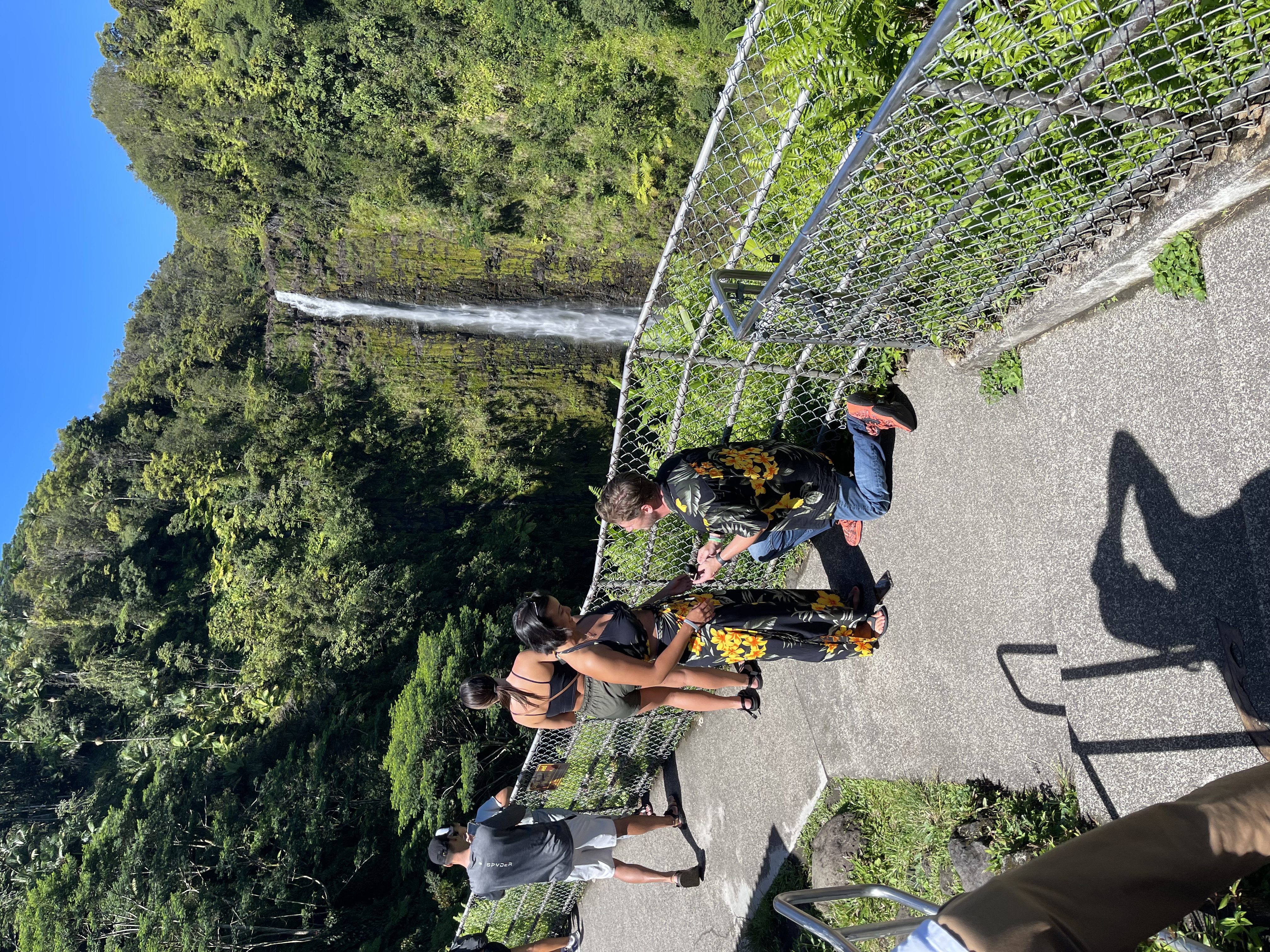
This is the classic postcard view. From here, you look directly across a gorge at the 80-foot falls plunging into a turquoise pool. The surrounding vegetation is lush and tropical, filled with wild ginger and monstera. This is the best spot for photography and where you'll see the rainbow.
The Upper Trail and Banyan Trees
To the left of the main viewing area, a short flight of stone steps leads you up to a second lookout. This path takes you to the top of the falls, where you can see the Wailuku River just before it goes over the edge. The view is dominated by several massive, ancient banyan trees with their incredible root systems. From here, you can look down into the gorge, but you can't see the face of the falls.
The Legend of Hina's Cave
The cave behind the falls is said to be the home of Hina, mother of the demigod Māui. Legends tell of a time when a giant moʻo (lizard) named Kuna trapped Hina in her cave by damming the river. Hina called for Māui, who raced to the scene and defeated Kuna with a series of powerful lava-heated rocks, causing the river to boil—a story sometimes connected to the Boiling Pots area further upstream.
A Critical Safety Warning
The Wailuku River is beautiful but can be incredibly dangerous. Do not, under any circumstances, attempt to swim in the pool below the falls or climb on the rocks. The river is prone to flash floods, where water levels can rise several feet in just a few minutes with no warning, even if it isn't raining where you are. The U.S. Geological Survey (USGS) monitors the river's flow, and its data shows just how quickly conditions can change. Stay within the designated viewing areas and heed all warning signs.
Beyond Rainbow Falls: Peʻepeʻe Falls & Boiling Pots
Rainbow Falls is just one part of Wailuku River State Park. About 1.5 miles further up Waiānuenue Avenue, you'll find the park's other section, which features Peʻepeʻe Falls and an area known as the Boiling Pots.
- Peʻepeʻe Falls: A much wider, more turbulent series of cascades than Rainbow Falls. It is viewed from a lookout point.
- Boiling Pots: A succession of terraced pools connected by underground lava tubes. During high water flow, the churning water creates a bubbling, "boiling" effect. The same severe safety warnings apply here; swimming is forbidden and has tragically led to fatalities.
A visit to this area takes only another 15-20 minutes and provides a different perspective on the powerful Wailuku River.
Planning Your Visit: Practical Tips
Make the most of your trip to Rainbow Falls with these quick tips.
- Go Early: Arrive before 10 AM for the best chance at seeing the rainbow and to beat the tour bus crowds.
- It's Free: There is no admission fee to enter Wailuku River State Park.
- Facilities: Public restrooms are available next to the parking lot.
- Bug Spray: Hilo's damp, lush environment is prime territory for mosquitoes. It's always a good idea to have repellent on hand.
- Footwear: If you plan to walk up the steps to the upper lookout, sturdy shoes are recommended as the path can be slippery.
- Combine Your Trip: Rainbow Falls is a quick stop. It's easily combined with a visit to the Kaumana Caves, downtown Hilo's farmers market, or the beaches along the Hāmākua Coast. If you're looking to build a full day of sightseeing, many visitors find that a guided tour is an excellent way to connect the dots between Hilo's highlights and the incredible stories behind them. You can explore a variety of options for your Big Island adventure to make the most of your time.
Rainbow Falls offers a perfect slice of the Big Island's natural beauty and cultural depth, all wrapped up in one convenient, breathtaking package. It’s a testament to the power of water, rock, and light that has captivated visitors for generations.
Related Reading
- A Visitor's Guide to ʻAkaka Falls State Park: /blog/visiting-akaka-falls-state-park
- The Ultimate Guide to Hawaiʻi Volcanoes National Park: /blog/ultimate-guide-to-hawaii-volcanoes-national-park
- Hilo's Top Attractions: Best Things to See and Do: /blog/best-things-to-do-in-hilo