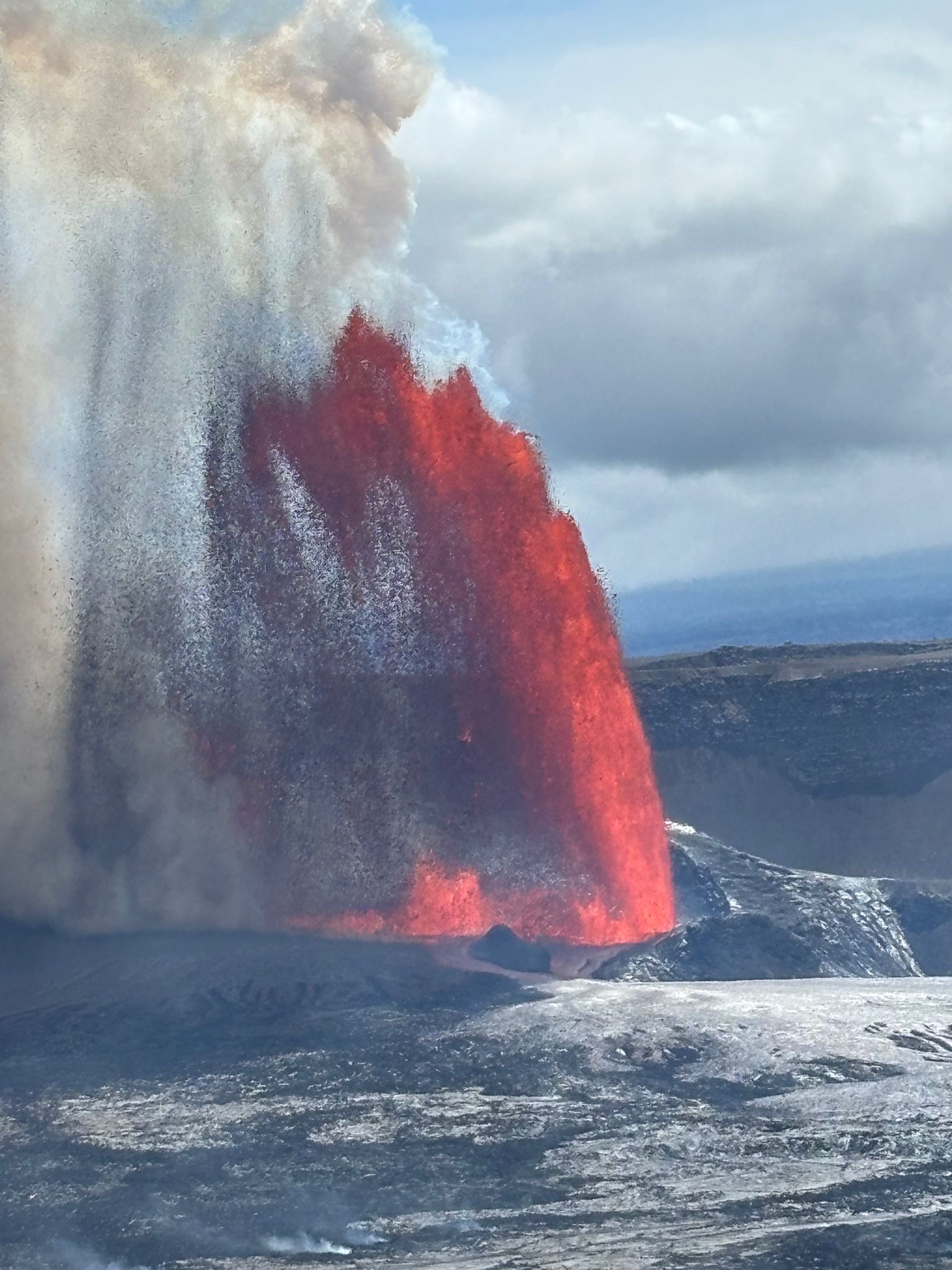
Crater Rim Drive: Your Self-Guided Tour of Kīlauea Caldera
Circling the dramatic summit caldera of Kīlauea, Crater Rim Drive offers the most accessible way to experience the power of Hawaiʻi's most active volcano. Our self-guided tour shows you exactly where to stop.
A visit to the summit of Kīlauea is a journey to the heart of creation and destruction, a landscape shaped by forces deep within the earth. The best way to experience this dynamic environment is a slow, self-guided tour along Crater Rim Drive. This scenic road traces the edge of Kīlauea Caldera and the smaller Halemaʻumaʻu crater, offering access to stunning overlooks, steaming vents, and lush rainforest trails.
While the full 11-mile loop has been permanently altered by past eruptions, the open sections provide a world-class tour of volcanic geology. Prepare for dramatic views, the scent of sulfur on the air, and an unforgettable look into the home of Pele, the Hawaiian deity of fire and volcanoes.
Planning Your Drive: What to Know Before You Go
Crater Rim Drive is located entirely within Hawaiʻi Volcanoes National Park. The journey begins just past the park's entrance station. Before setting out, it is absolutely essential to check current conditions.
- Park Status: Always check the official National Park Service (NPS) website for alerts regarding volcanic activity, road closures, or air quality advisories. Conditions on Kīlauea can change rapidly.
- Entrance Fee: A per-vehicle entrance fee is required to enter the park, which is valid for seven days. You can pay at the entrance station or purchase a pass online in advance. See the NPS site for a current fee schedule.
- Start at the Visitor Center: Your first stop should be the Kīlauea Visitor Center. Rangers can provide the latest updates, maps, and recommendations for your visit. It’s also a good spot for restrooms and to fill up water bottles.
- Time Commitment: To do the drive properly, allow at least 2 to 4 hours. This gives you enough time to get out at each stop, take short walks, and absorb the scenery without rushing.
Stop 1: Kīlauea Visitor Center & Volcano House
Your tour begins at the hub of the park. Park your car and explore this area on foot before getting back on the road.
Kīlauea Visitor Center
Open daily, the visitor center is your orientation point. Inside you'll find exhibits on the park's geology and ecology, a park store, and restrooms. Most importantly, you can speak directly with park rangers who have the most current information about eruption viewing, trail conditions, and closures. Don't skip this step; it can make or break your day.
Volcano House Hotel
Just across the street from the visitor center stands the historic Volcano House, a hotel that has been welcoming guests to the crater's edge since 1846. Even if you're not a guest, you are welcome to walk through the lobby to the back viewing deck. The panoramic view of Kīlauea Caldera from here is breathtaking. It's a great place to get your first look at Halemaʻumaʻu crater and understand the sheer scale of the landscape.
Stop 2: Steam Vents (Wahinekapu) & Sulphur Banks (Haʻakulamanu)
Continuing clockwise on Crater Rim Drive, your next stops introduce you to the geothermal activity just beneath your feet.
Steam Vents (Wahinekapu)
Less than a mile from the visitor center, you'll see large parking areas for the steam vents. Here, groundwater seeps down to hot volcanic rocks, emerging as billows of warm, odorless steam. You can walk right up to the rock fissures where the steam escapes. It’s a tangible reminder that you're standing on an active volcano. On a cool, misty day, the effect is especially dramatic.
Sulphur Banks (Haʻakulamanu) Trail
Across the road from the steam vents is the trailhead for the Sulphur Banks. This easy, paved 0.7-mile (one-way) path takes you past volcanic gas vents rich in sulfur and other minerals. The gases stain the rocks with vibrant yellow, red, and white crystals. The smell is pungent—like rotten eggs—due to the hydrogen sulfide gas. It is a fascinating and colorful display of volcanic chemistry. Individuals with heart or respiratory issues, pregnant women, and young children should avoid this area due to the gasses.
Stop 3: Kīlauea Caldera Overlooks
This section of the drive offers the most commanding views of the caldera itself. These are the classic postcard shots you have been waiting for.
Kīlauea Overlook
This pullout offers a slightly different angle than the Volcano House, looking more directly into the vast expanse of the main caldera. It’s an ideal spot to appreciate the nested structure of the craters, with Halemaʻumaʻu sitting inside the larger Kīlauea Caldera. Interpretive signs here help identify key geological features.
Uēkahuna
This is the highest point on the caldera rim (4,078 ft) and the site of the former Jaggar Museum, which was closed and dismantled after being damaged in the 2018 eruption. The overlook here provides what is arguably the most direct and expansive view of Halemaʻumaʻu crater. This has been the primary viewing area during recent summit eruptions. Check the park website for the latest eruption status, as this is the go-to spot for seeing lava glow or activity, especially after dark. Parking is limited and fills up quickly during eruption events.
Stop 4: Kīlauea Iki Crater & Thurston Lava Tube (Nāhuku)
Turning away from the main caldera, the drive now takes you past a different kind of volcanic feature—a pit crater with a once-molten lava lake and a classic lava tube.
Kīlauea Iki Overlook
This overlook provides a stunning view of Kīlauea Iki (“Little Kīlauea”) crater, the site of a spectacular 1959 eruption that sent lava fountains soaring up to 1,900 feet high. From the overlook, you can see the trail that crosses the crater floor, a now-solidified but still-steaming lake of lava. For hikers, the 4-mile Kīlauea Iki Trail loop is one of the premier hikes in all of Hawaiʻi.
Thurston Lava Tube (Nāhuku)
Just a short drive from the Kīlauea Iki Overlook is the parking area for Nāhuku. A short, paved trail through a lush fern forest leads you to the entrance of a 500-year-old lava tube. Walking through this cavernous tunnel, formed by a river of molten rock, is a highlight for many visitors. The tube is lit from 8 a.m. to 8 p.m. daily. To experience it in a more natural state, consider going before or after these hours with a flashlight. Parking is very limited; it's best to visit early in the morning or late in the afternoon to avoid crowds.
The parking area was recently redesigned, but it can still be a bottleneck. If the lot is full, you can park at the Kīlauea Iki Overlook and take a 0.5-mile trail from there to Nāhuku.
Stop 5: The End of the Road (For Now)
Past Nāhuku, Crater Rim Drive continues for a couple of miles but eventually comes to a dead end. This section is less crowded and offers a different perspective.
Keanakākoʻi Crater Overlook
In 2018, much of this area collapsed during the summit eruption sequence. A new overlook was opened in 2021, providing views of the Keanakākoʻi Crater and the southern part of the caldera. It’s a stark landscape marked by fault lines and cracks from the recent geologic drama. The short, paved trail to the overlook is about a 1-mile walk (2 miles round-trip) from the parking area. This stop gives you a profound sense of the transformative power of Kīlauea's eruptions.
From here, you will turn around and retrace your route.
The Closed Section: A Legacy of the 2018 Eruption
Prior to 2018, Crater Rim Drive was a full loop. The southwestern portion of the road, which ran from the Jaggar Museum area past the Halemaʻumaʻu Overlook, was severely damaged by the massive summit collapse events of the 2018 eruption. According to the USGS, the caldera floor dropped by more than 1,600 feet in some places, and the road was destroyed by faulting and subsidence.
This section remains closed indefinitely due to instability and the significant damage. Its closure is a powerful testament to the ongoing and unpredictable nature of the volcano.
What to Bring for Your Drive
Even though you'll be in your car for much of the time, being prepared will make your trip safer and more enjoyable.
- Layers of Clothing: The summit weather can change in an instant, from warm and sunny to cold, windy, and rainy. A rain jacket is a must.
- Sturdy Shoes: You'll want comfortable, closed-toe shoes for walking on uneven lava trails.
- Water and Snacks: There are limited services beyond the Volcano House. Bring plenty of water and some food.
- Sun Protection: The sun can be intense at 4,000 feet elevation. Bring sunscreen, a hat, and sunglasses.
- Camera and Binoculars: The views are vast, and binoculars are great for spotting details in the crater or looking for birds.
- Full Tank of Gas: Fill up your tank in Volcano Village or Hilo before entering the park.
This self-guided tour offers a framework, but the best approach is to take your time. Let your curiosity guide you. Pull over, get out of the car, and feel the raw energy of one of the planet's most active and awe-inspiring places. For more trip planning, see our guide to designing your perfect Hawaiʻi vacation.
Related Reading
- A Guide to Hiking the Kīlauea Iki Trail: /blog/kilauea-iki-trail-guide
- Driving the Chain of Craters Road to the Sea: /blog/chain-of-craters-road-scenic-drive
- Stargazing on the Big Island: /blog/big-island-stargazing-guide